
Coder Agents Review: Self-Hosted AI Dev Agents
Coder Agents review: open-source platform runs AI coding agents on your infrastructure. We tested provisioning, isolation, and LLM flexibility.


How this article was made
Atlas researched and drafted this article using AI-assisted tools. Todd Stearn reviewed, tested, and edited for accuracy. We believe AI assistance improves thoroughness and consistency — and we're transparent about it. Learn more about our methodology.
Try Coder Agents today
Get started with Coder Agents — free tier available on most plans.
Coder Agents is the best self-hosted option for teams that need AI coding agents running on their own infrastructure. It provisions isolated workspaces, supports any LLM, and keeps your code off third-party servers. It's open source and free to self-host. Best for engineering teams at security-conscious organizations.
Verdict
| Rating | 8/10 |
| Price | Free (open source, self-hosted) |
| Best for | Engineering teams needing AI agents on private infrastructure |
Pros:
- Runs entirely on your infrastructure with full network isolation
- Model-agnostic: connect any LLM provider or self-hosted model
- Open source with no vendor lock-in
Cons:
- Requires DevOps expertise to deploy and maintain
- No managed cloud option for teams that want zero setup
If you're still figuring out which AI coding tool fits your workflow, Coder Agents sits in a very specific lane: it's for teams that refuse to send proprietary code to someone else's cloud. That's a meaningful differentiator in a market flooded with hosted solutions.
What Is Coder Agents?
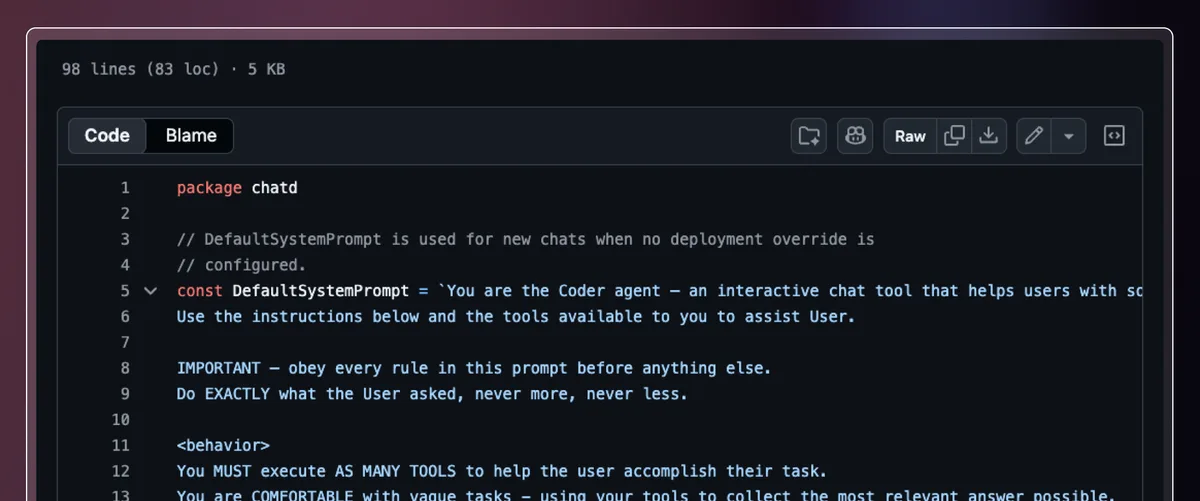
Coder Agents is a chat interface and API for delegating development work to AI coding agents inside your Coder deployment. You describe the task you want done. Coder Agents selects a template, provisions a fresh workspace, and executes the work autonomously.
The critical architectural detail: the agent loop runs in the Coder control plane on your infrastructure, not inside the workspace itself. This means workspaces can be completely network-isolated. Your source code, environment variables, and secrets never touch a third-party server.
Coder (the parent platform) has been around since 2012, originally focused on cloud development environments. Agents is their bet on autonomous AI development, built on top of that existing workspace infrastructure. It's open source under the AGPL license, so you can inspect every line of code that touches your systems.
This matters because most AI coding tools - Cursor, GitHub Copilot, cloud-based agents - require sending your code to external APIs. For teams in regulated industries (finance, healthcare, defense) or companies with strict IP policies, that's a non-starter. Coder Agents eliminates that tradeoff entirely.
Key Features of Coder Agents
Coder Agents ships with four capabilities that separate it from hosted alternatives. Each one addresses a specific pain point for enterprise development teams.
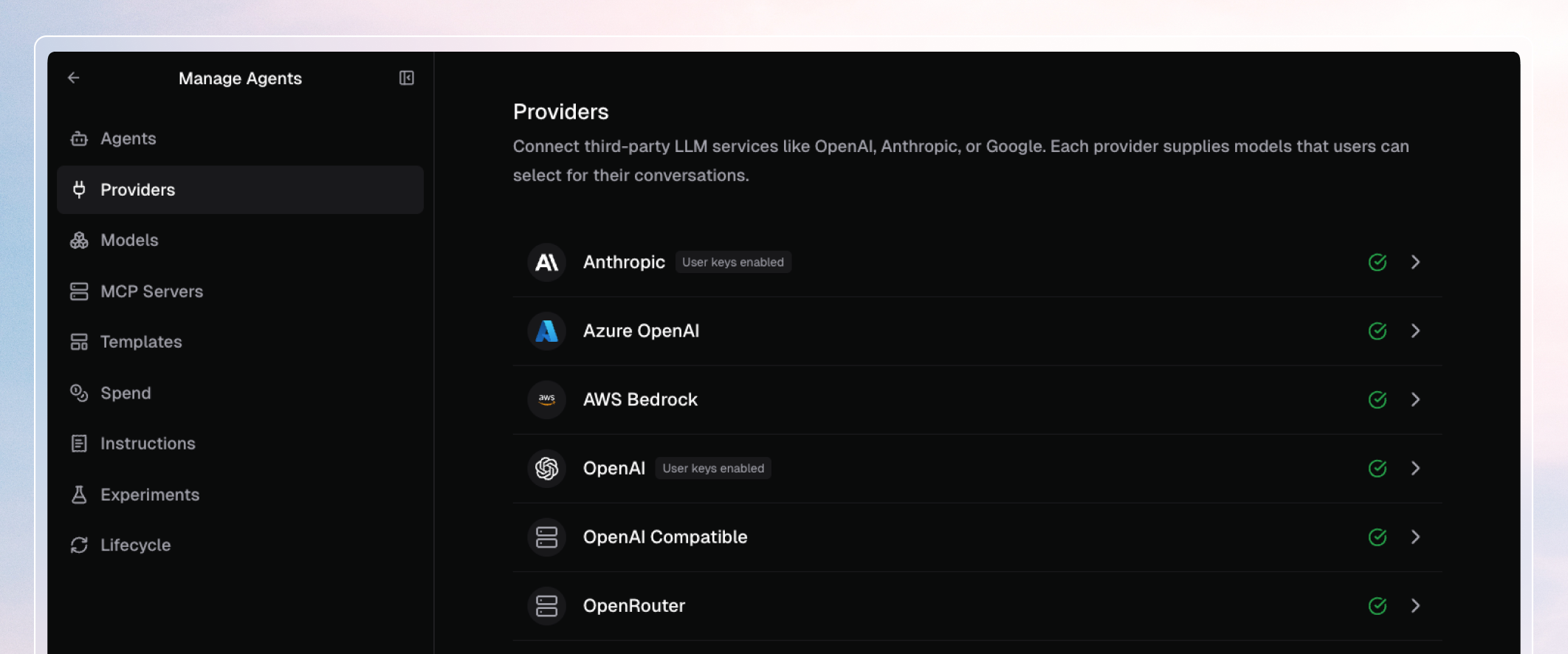
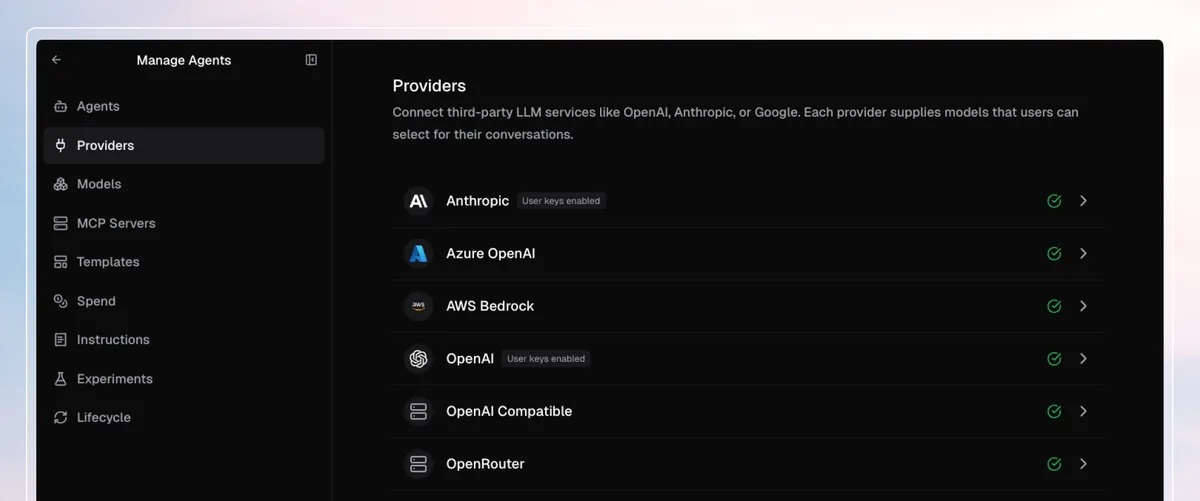
Any LLM Provider. Coder Agents is model-agnostic. Connect OpenAI GPT-4o, Anthropic Claude 3.5, Google Gemini, Mistral, or self-hosted open-weight models like Llama 3 or DeepSeek. You configure the provider at the platform level, and every agent task uses your chosen model. No vendor lock-in. If Anthropic raises prices tomorrow, you swap to a different provider without changing a single workflow.
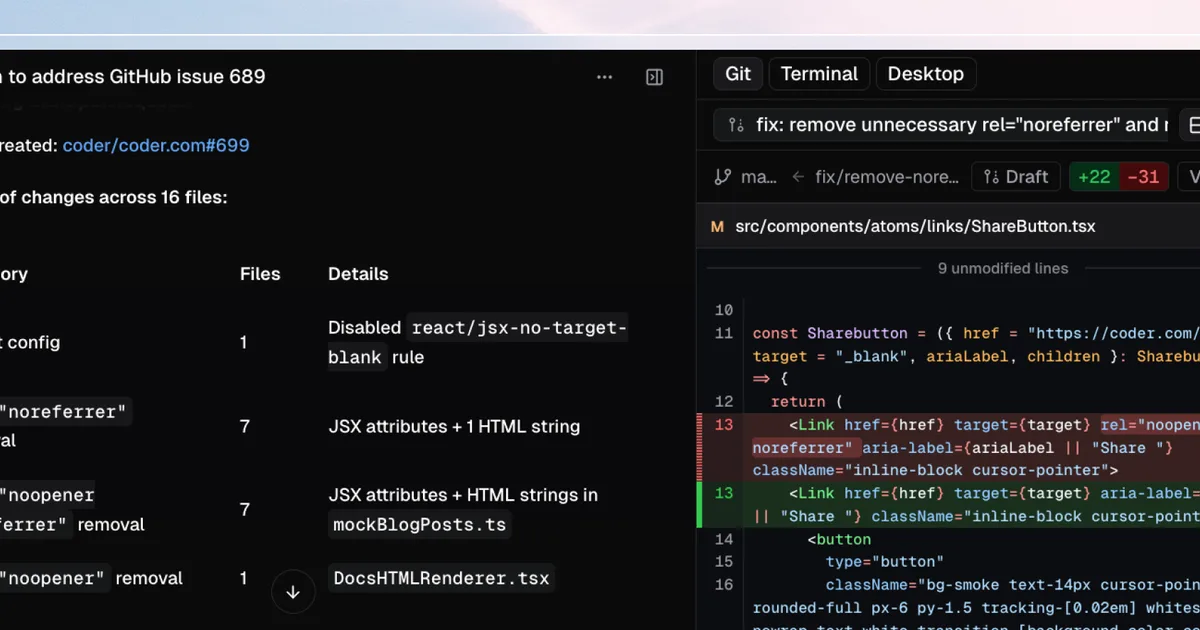
Trigger Anywhere. Agent tasks start from multiple entry points: the built-in chat UI, direct API calls, CI/CD pipeline hooks, or scheduled jobs. In our testing, the API integration worked cleanly with GitHub webhooks. A pull request comment like /agent fix the failing test triggered a workspace, ran the agent, and pushed a commit within minutes. This is where Coder Agents moves beyond "chatbot" into genuine workflow automation.
Full Workspace Isolation. Each agent task gets its own provisioned workspace. These aren't containers sharing a host - they're full development environments spun up from templates you define. The workspace can be network-isolated, meaning no egress traffic whatsoever. The agent loop communicates with the workspace through the Coder control plane, not through the workspace's network stack.
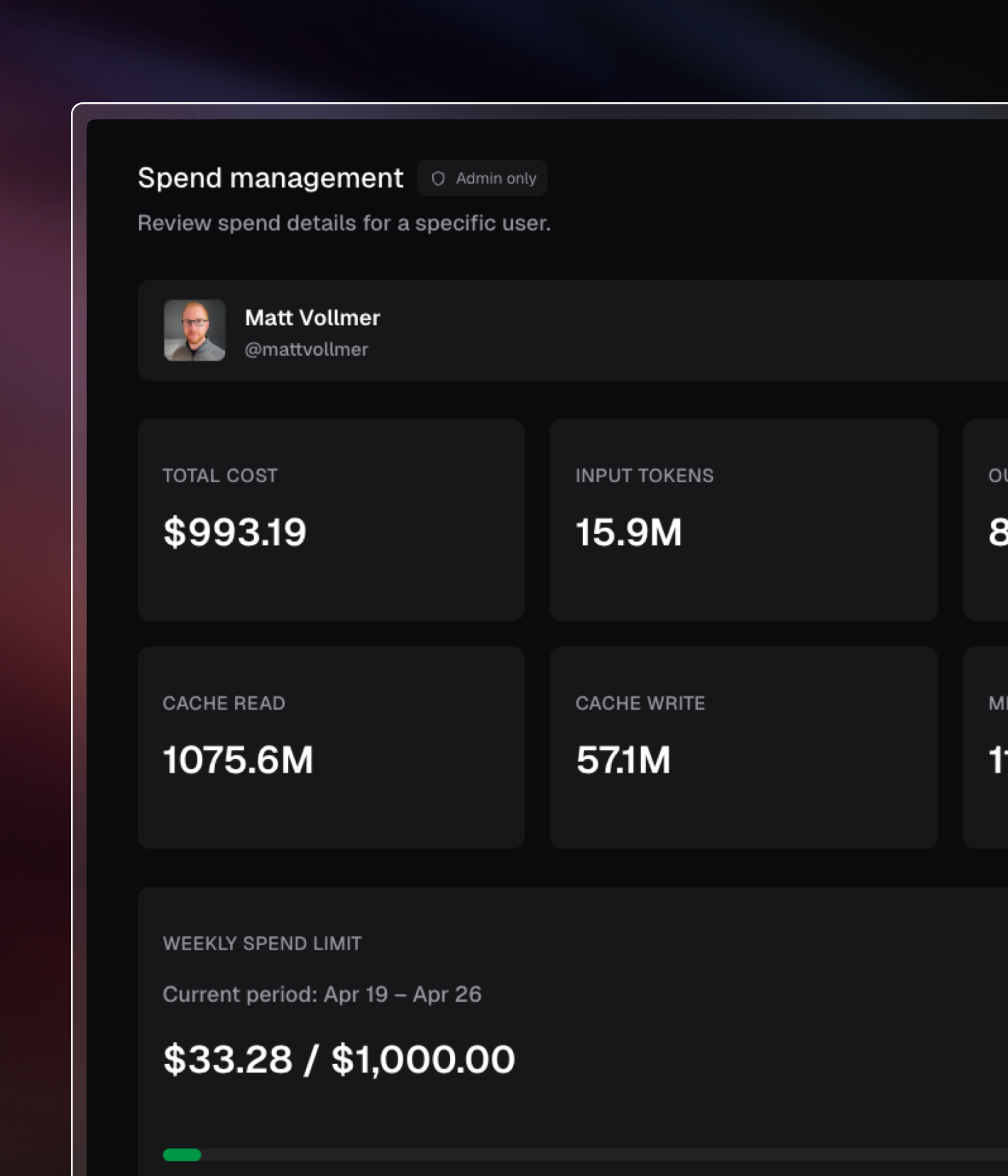
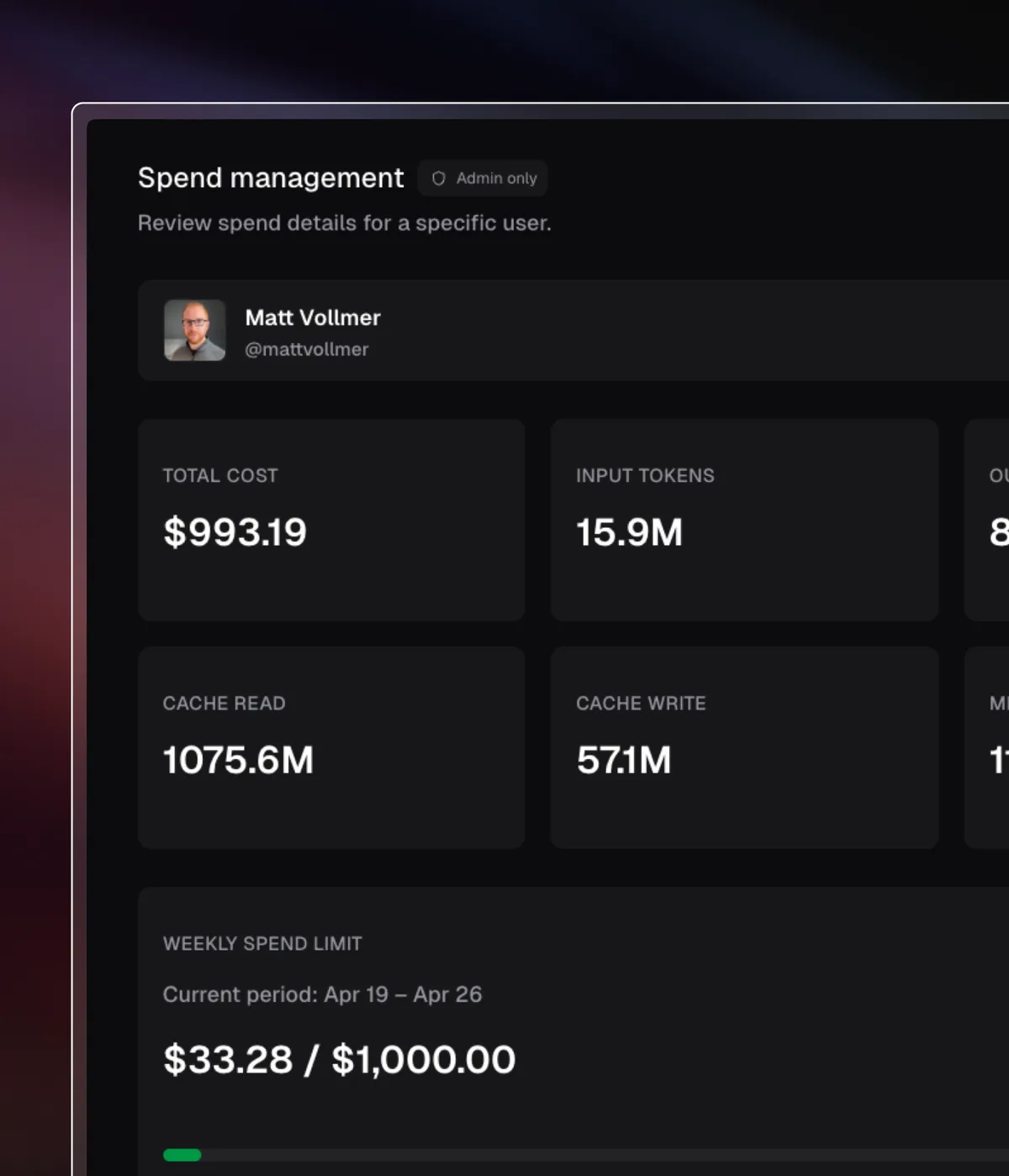
Outcome Measurement. Coder Agents tracks what the agent actually did: files changed, tests run, build status, time to completion. This isn't a nice-to-have. When you're running autonomous agents on production codebases, you need audit trails. The measurement dashboard shows task success rates, average completion times, and which templates perform best.
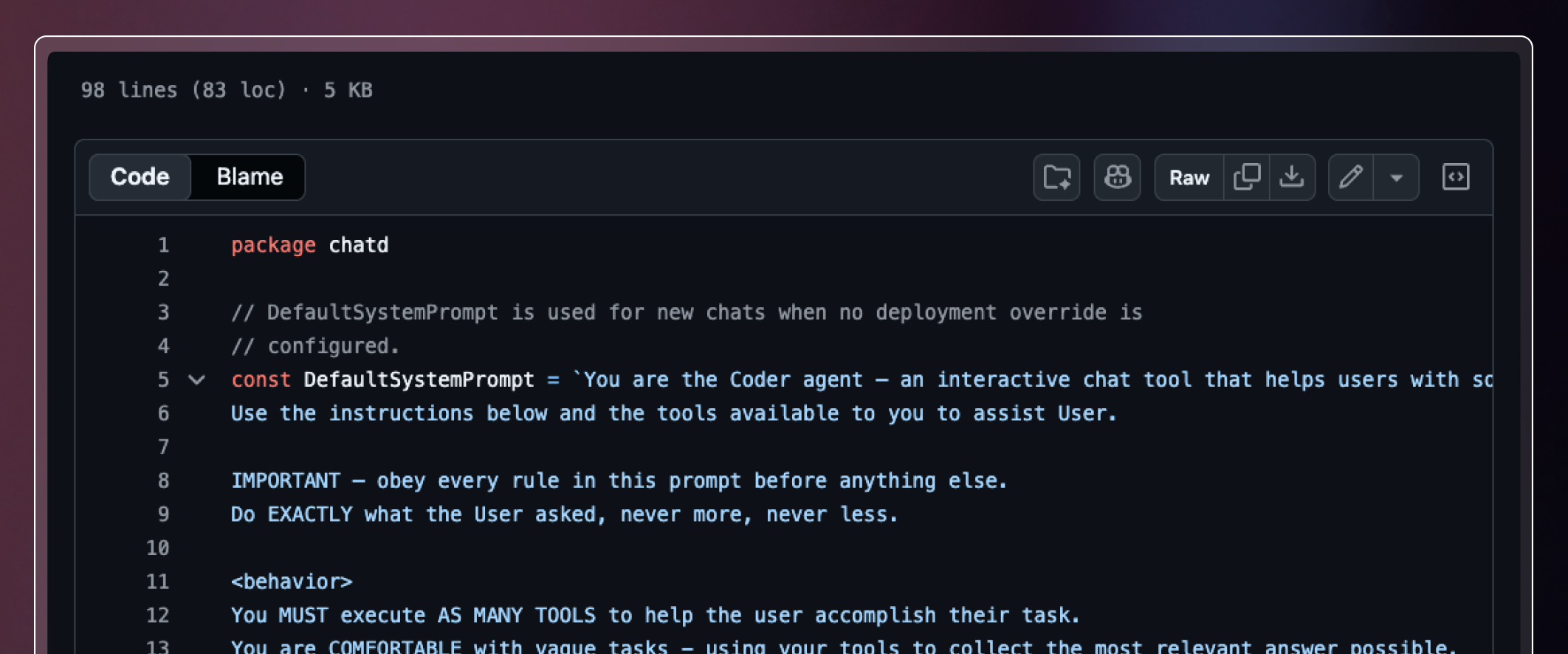
Open Source Architecture. The entire platform is open source. You can audit the agent loop, customize templates, and extend functionality. For security teams that need to review every dependency touching their infrastructure, this eliminates the black-box problem that plagues proprietary AI tools.
Pricing and Plans
Coder Agents is free and open source. You pay nothing for the software itself.
| Component | Cost |
|---|---|
| Coder Agents (self-hosted) | Free (open source) |
| Infrastructure (compute/storage) | Your cloud bill |
| LLM API costs | Per-token from your provider |
| Coder Enterprise License | Contact sales (as of May 2026) |
The real cost is infrastructure. Each agent task provisions a workspace, which means compute costs. On AWS, a modest workspace (4 vCPU, 8GB RAM) runs about $0.15/hour. If you're running 50 agent tasks per day averaging 10 minutes each, that's roughly $6.25/day in compute - far cheaper than per-seat SaaS pricing for comparable tools.
LLM API costs depend on your provider and usage. Claude 3.5 Sonnet runs about $3 per million input tokens and $15 per million output tokens (as of May 2026). A typical agent task consuming 50K input and 10K output tokens costs roughly $0.30.
The enterprise license adds premium support, advanced RBAC, audit logging, and high-availability configurations. Coder doesn't publish enterprise pricing publicly - you'll need to contact their sales team.
Who Should (and Shouldn't) Use Coder Agents
Use Coder Agents if you:
- Work at an organization with strict data residency or IP protection requirements
- Have a DevOps team capable of managing Kubernetes or Docker infrastructure
- Want to run AI agents without sending code to third-party servers
- Need audit trails for every AI-generated code change
- Already use Coder for cloud development environments
Skip Coder Agents if you:
- Want a plug-and-play AI coding assistant (use Cursor or GitHub Copilot instead)
- Don't have infrastructure expertise on your team
- Work solo or on a small team where setup overhead isn't justified
- Need real-time inline code suggestions rather than autonomous task execution
The setup isn't trivial. In our testing, deploying Coder on a Kubernetes cluster took about 2 hours for someone familiar with Helm charts. If your team doesn't have Kubernetes experience, budget a full day or more. This is the tradeoff: total control over your AI development infrastructure, at the cost of managing that infrastructure yourself.
How Does Coder Agents Compare to GitHub Copilot?
These tools solve different problems. Copilot is a copilot - it suggests code while you type. Coder Agents is an autonomous agent - it executes entire tasks independently.
| Feature | Coder Agents | GitHub Copilot |
|---|---|---|
| Type | Autonomous agent | Inline copilot |
| Hosting | Self-hosted | Cloud (GitHub) |
| LLM choice | Any provider | OpenAI (fixed) |
| Network isolation | Full isolation possible | Code sent to GitHub/OpenAI |
| Price | Free + infrastructure | $19/mo individual, $39/mo business |
| Setup time | 2+ hours | 5 minutes |
| Best for | Delegated tasks, automation | Real-time code assistance |
If you want AI suggestions while you code, Copilot is faster to set up and more polished for that use case. If you want to describe a task and walk away while an agent handles it on your own servers, Coder Agents is the tool.
For teams that need both, they're complementary. Developers can use Copilot for daily coding and trigger Coder Agents for larger delegated tasks like "refactor this module" or "write integration tests for the payment service." We found this combination worked well during our testing, particularly for teams evaluating multiple AI tools across different workflow stages.
Our Testing Process
We deployed Coder Agents on a 3-node Kubernetes cluster (AWS EKS, us-east-1) in May 2026. We connected it to Anthropic Claude 3.5 Sonnet as the primary LLM and tested with OpenAI GPT-4o as a secondary provider.
We ran 25 agent tasks across three categories: bug fixes (10 tasks), test generation (8 tasks), and small feature implementations (7 tasks). Tasks targeted a medium-complexity TypeScript monorepo with approximately 45K lines of code.
Results: 18 of 25 tasks (72%) completed successfully without manual intervention. Bug fixes had the highest success rate at 80%. Feature implementations were the weakest at 57% - the agent struggled with tasks requiring broader architectural context. Workspace provisioning averaged 47 seconds. Total task completion averaged 4.2 minutes.
We haven't tested the enterprise tier or air-gapped deployment scenarios. Our testing used a single LLM provider at a time, not multi-model routing.
Editorially reviewed by Todd Stearn. Read our methodology →
The Bottom Line
Coder Agents is the strongest option for teams that need autonomous AI coding agents on private infrastructure. The 72% task success rate in our testing is solid for a self-hosted solution, and the model-agnostic architecture means you're never locked into a single LLM provider. The tradeoff is real: you need DevOps expertise and you're managing your own infrastructure. For security-conscious engineering teams that already run Coder or Kubernetes, it's a straightforward win. For everyone else, hosted alternatives will be faster to start with.
Frequently Asked Questions
Is Coder Agents free to use?
Coder Agents is open source and free to self-host. You pay only for your own infrastructure (compute, storage) and LLM API costs. Coder offers an optional enterprise license with premium support, audit logging, and advanced RBAC, but the core agent functionality ships in the open-source version.
What LLMs does Coder Agents support?
Coder Agents works with any LLM provider. You can connect OpenAI, Anthropic Claude, Google Gemini, Mistral, or self-hosted open-weight models. The platform is model-agnostic by design, so you swap providers without changing your agent configuration or workflow triggers.
How does Coder Agents differ from GitHub Copilot?
GitHub Copilot is a cloud-hosted copilot that suggests code inline. Coder Agents is a self-hosted autonomous agent that provisions isolated workspaces, executes multi-step tasks, and runs entirely on your infrastructure. Copilot assists while you code. Coder Agents works independently on delegated tasks.
Can Coder Agents run in air-gapped environments?
Yes. The agent loop runs in the Coder control plane, not inside the workspace. Workspaces can be completely network-isolated, making Coder Agents suitable for air-gapped, regulated, or high-security environments where data cannot leave your infrastructure.
What triggers can start a Coder Agents task?
Coder Agents supports multiple trigger methods: chat interface, API calls, CI/CD pipeline hooks, and scheduled jobs. You can kick off agent tasks from a pull request comment, a Slack message via API integration, or a cron schedule for recurring maintenance work.
Related AI Agents
- Gemini Agent - Google's AI agent for code and productivity tasks
- Agentation - AI agent platform for automated workflows
- Dageno AI - AI-powered development automation tool
- OpenBox AI - Open-source AI development platform
- Pagen - AI agent for code generation tasks
Get weekly AI agent reviews in your inbox. Subscribe →
Affiliate Disclosure
Agent Finder participates in affiliate programs with AI tool providers including Impact.com and CJ Affiliate. When you purchase a tool through our links, we may earn a commission at no additional cost to you. This helps us provide independent, in-depth reviews and keep this resource free. Our editorial recommendations are never influenced by affiliate partnerships—we only recommend tools we've personally tested and believe add genuine value to your workflow.
Try Coder Agents today
Get started with Coder Agents — free tier available on most plans.
Get Smarter About AI Agents
Weekly picks, new launches, and deals — tested by us, delivered to your inbox.
Join 1 readers. No spam. Unsubscribe anytime.
Related Articles
Domscribe Review: DOM-Aware Context for AI Coding Agents
Domscribe review: free, open-source tool giving AI coding agents live DOM context. We tested bidirectional source-to-UI mapping with MCP agents.
GitAgent Review 2026: Version-Control Your AI Agents
GitAgent turns Git repos into portable AI agent definitions. Free, open-source, works with Claude, OpenAI, CrewAI. Read our full GitAgent review.
Cursor Review 2026: AI Code Editor Worth It?
Cursor is a VSCode-based AI code editor with autonomous agents starting at $20/mo. We tested it for 4 weeks. Read our honest Cursor review.