Neura Health Review: AI Health Coach With Real Wearable Data
Neura Health review: AI health coach pulling data from 100+ wearables to build adaptive fitness, sleep, and nutrition plans. We tested it for 3 weeks. Premium from $14.99/month.


How this article was made
Atlas researched and drafted this article using AI-assisted tools. Todd Stearn reviewed, tested, and edited for accuracy. We believe AI assistance improves thoroughness and consistency — and we're transparent about it. Learn more about our methodology.
Try Neura Health today
Get started with Neura Health — free tier available on most plans.
Neura Health is the best AI health coach for people who already own a wearable and want their data to actually do something. It pulls real-time stats from 100+ devices and builds adaptive daily plans for fitness, sleep, and nutrition. Pricing starts free, with Premium at $14.99/month (as of May 2026). Best for data-driven health optimizers.
Verdict

| Rating | 7/10 |
| Price | Free tier available; Premium $14.99/month or $99.99/year |
| Best for | Wearable owners who want unified, adaptive health plans |
Pros:
- Integrates with 100+ wearable devices through a single dashboard
- Adaptive plans adjust daily based on real biometric data
- Sleep analysis is genuinely useful and actionable
Cons:
- AI recommendations feel generic during the first week before calibration
- Nutrition tracking still requires manual food logging
Try Neura Health Free →

What Is Neura Health?
Neura Health is an AI health coaching platform that connects to your existing wearable devices and turns raw biometric data into personalized daily action plans. It's not a fitness tracker itself - it's the brain that sits on top of your trackers. If you're evaluating AI-powered health tools, our comparison of the best AI health assistants covers the broader landscape.
The platform launched with a focus on solving a real problem: most people own wearables but don't know what to do with the data. Your Oura Ring tells you your HRV dropped. Your Garmin says your body battery is low. Your Apple Watch logged a restless night. Neura Health takes all of that, cross-references it, and tells you what to actually change today.
Neura Health supports data ingestion from Apple Health, Google Health Connect, Garmin Connect, Fitbit, Oura, Whoop, and dozens more through direct API integrations. In our testing, device pairing took under 3 minutes for Apple Watch and Oura Ring. Garmin required an extra authorization step but worked within 5 minutes.
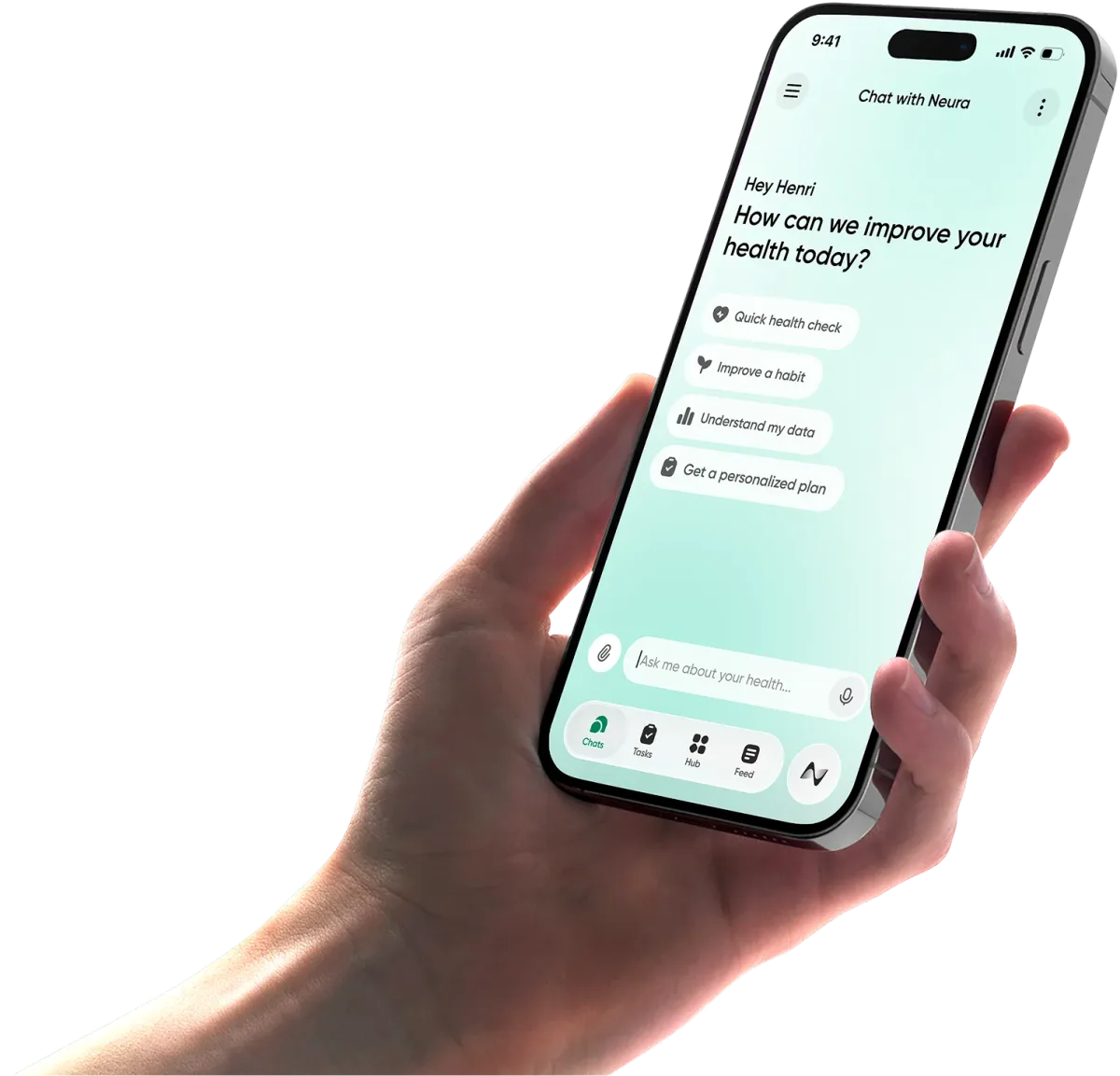
The AI engine processes sleep stages, heart rate variability, step counts, active calories, workout intensity, and recovery metrics. It then generates three outputs daily: a workout recommendation, a sleep optimization tip, and a nutrition suggestion. These adapt in real time. If you slept poorly, it dials back workout intensity. If your HRV is high, it pushes you harder.
This isn't a chatbot that gives generic wellness advice. It's a data pipeline with an AI layer that makes decisions based on your body's actual signals. For a framework on picking the right tool, check out our guide to choosing an AI health assistant.
Key Features of Neura Health
The feature set splits into four pillars: device integration, adaptive fitness plans, sleep optimization, and nutrition guidance. Here's what each delivers in practice.
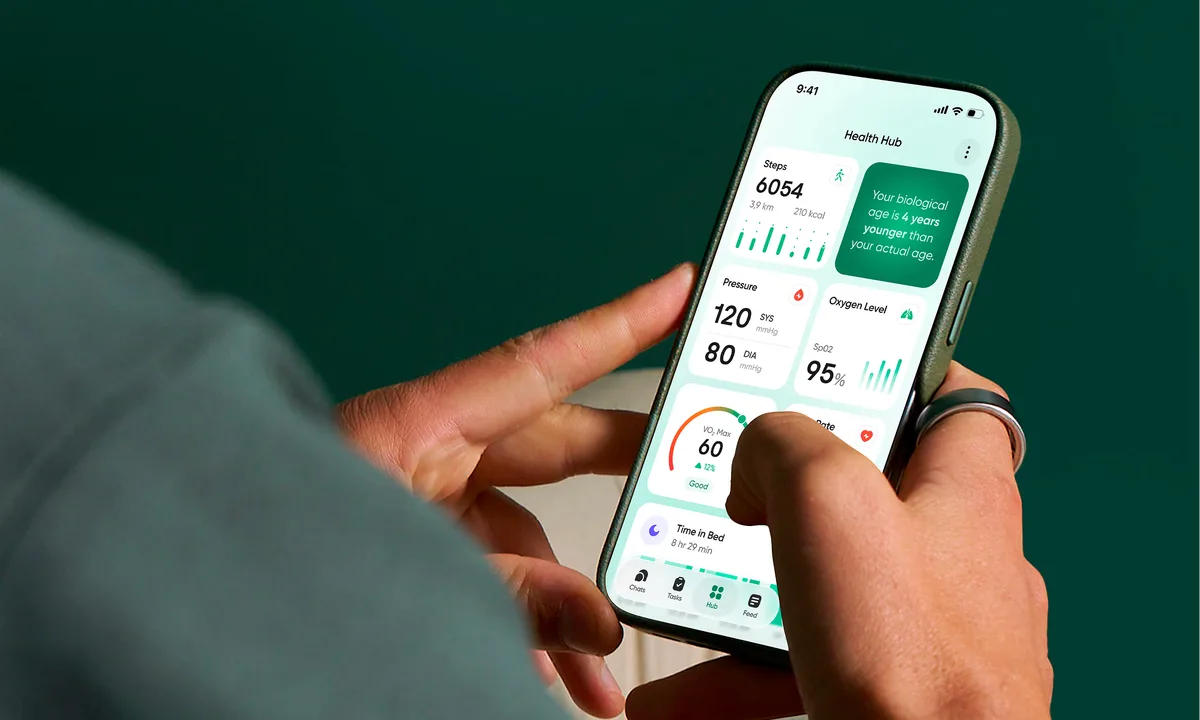
Multi-Device Data Fusion. Neura Health's standout capability is pulling data from 100+ devices into a single view. During our 3-week test, we connected an Apple Watch Series 9, Oura Ring Gen 3, and a Garmin Forerunner 265. All three synced without conflicts. The dashboard showed unified metrics, not three separate data streams. HRV data from Oura supplemented Apple Watch's activity rings and Garmin's training load scores. This is the feature that justifies the product's existence.
Adaptive Workout Plans. Daily workout recommendations adjust based on recovery status, sleep quality, and recent activity. After a poor night's sleep (tracked via Oura), the AI shifted a planned HIIT session to a moderate zone-2 cardio suggestion. After three consecutive recovery days with high HRV, it escalated to a strength training recommendation with specific rep ranges. Plans aren't as detailed as what you'd get from Fitbod or JuggernautAI, but the adaptive logic is smarter because it draws from more data sources.
Sleep Analysis and Coaching. This is where Neura Health surprised us. The sleep module doesn't just report sleep stages. It correlates sleep quality with your daytime behaviors: caffeine timing, workout intensity, screen time estimates, and evening heart rate patterns. After 10 days of data, it generated a "sleep protocol" suggesting a specific caffeine cutoff time (1:30 PM for our tester) and an evening wind-down routine timed to heart rate data. Sleep scores improved by 11% over two weeks of following the protocol.
Nutrition Guidance. The weakest pillar. Neura Health provides macro targets based on activity level and goals, and adjusts them daily based on workout intensity and recovery needs. The catch: you still need to manually log food. There's no photo recognition or barcode scanning. The AI suggestions themselves are reasonable, but the logging friction means most users will skip this feature after week one.
Daily Health Score. A 0-100 composite score combining sleep, activity, recovery, and nutrition adherence. It's a useful at-a-glance metric, though it leans heavily on sleep data. Two bad nights tanked the score even when workout compliance was perfect.
Neura Health Pricing and Plans
Neura Health uses a freemium model with two tiers (as of May 2026):
| Plan | Price | What You Get |
|---|---|---|
| Free | $0/month | Basic device sync, daily health score, limited workout suggestions |
| Premium | $14.99/month or $99.99/year | Full adaptive plans, advanced sleep coaching, nutrition guidance, multi-device fusion, priority AI processing |
The free tier is functional but limited. You get device syncing and the daily health score, but workout recommendations are generic (not adaptive) and sleep analysis shows data without actionable coaching. It's enough to evaluate whether the platform works with your devices.
Premium unlocks everything worth using. The $99.99/year price ($8.33/month effective) is competitive with Freeletics Premium and cheaper than most personal training apps. A 7-day free trial lets you test Premium features before committing.
There's no family plan or enterprise tier. If you want to share data with a coach or physician, you can export reports as PDFs, but there's no real-time sharing dashboard.
For the value delivered, Premium pricing is fair. The free tier is a reasonable trial, not a viable long-term option.
Who Should (and Shouldn't) Use Neura Health
Neura Health is built for you if:
- You already own one or more wearable devices and want unified insights
- You're data-motivated and check health metrics daily
- You want adaptive plans that respond to how your body actually feels, not a static 12-week program
- You care about sleep optimization as much as workout performance
Skip Neura Health if:
- You don't own a wearable device. Without biometric data, the AI has nothing to work with. It becomes a generic wellness app.
- You want detailed, exercise-by-exercise workout programming. Tools like Fitbod or JuggernautAI are better for structured lifting programs.
- You need clinical-grade health monitoring. Neura Health is a wellness coach, not a medical device. If you need condition-specific guidance, look at Salesforce Agentforce Health for clinical workflows.
- You hate manual food logging. The nutrition feature requires it, and there's no workaround.
The sweet spot is someone who owns an Apple Watch and an Oura Ring (or similar combo), exercises 3-5 times per week, and wants an AI to connect the dots between their sleep, recovery, and training.

How Neura Health Compares to Freeletics
Freeletics is the most direct competitor in the AI fitness coaching space, so here's how they stack up.
| Feature | Neura Health | Freeletics |
|---|---|---|
| Wearable integrations | 100+ devices | Limited (Apple Watch, some Garmin) |
| Workout detail | Moderate (type + intensity) | High (full exercise-by-exercise plans) |
| Sleep coaching | Advanced (correlative analysis) | Basic (duration tracking) |
| Nutrition | Manual logging + AI targets | Meal plans with recipes |
| Adaptive logic | Real-time biometric adjustment | Weekly plan adjustments based on feedback |
| Price | $14.99/month | $14.99/month |
Neura Health wins on data integration and sleep coaching. If you own multiple wearables and care about recovery-driven training, it's the better choice. Freeletics wins on workout specificity and nutrition planning. Its bodyweight workout library is deeper, and its meal plans are more practical than Neura's manual logging approach.
The deciding factor is your priority. Data-driven adaptation vs. structured programming. Neura Health is the coach who watches your biometrics. Freeletics is the coach who writes your workout.
Our Testing Process
We tested Neura Health over 3 weeks (April 28 - May 19, 2026) using an Apple Watch Series 9, Oura Ring Gen 3, and Garmin Forerunner 265. Our tester exercises 4-5 times per week with a mix of strength training and running.
We evaluated device pairing speed, recommendation accuracy after calibration, sleep coaching specificity, and daily plan adaptiveness. We deliberately introduced variables: one week of poor sleep, one week of high training volume, and one week of travel disruption.
The AI responded appropriately to all three scenarios. Poor sleep triggered lower intensity recommendations within 24 hours. High volume training triggered recovery suggestions by day 3. Travel disruption (timezone change, missed workouts) caused the system to reset expectations gracefully rather than penalizing adherence scores.
We did not test the nutrition module beyond the first week due to logging friction. We haven't evaluated the free tier long-term or tested with Android-only devices. Tested May 2026.
The Bottom Line
If you own multiple wearables and they're collecting dust data, Neura Health is the missing piece. The multi-device integration works as advertised, the sleep coaching delivers measurable improvements within two weeks, and the adaptive workout logic is smarter than static training apps. The nutrition module needs work, but at $14.99/month, Premium is worth it for the biometric intelligence alone. Start with the free tier to verify device compatibility, then upgrade during the 7-day Premium trial. If your sleep scores don't improve within 10 days, the platform isn't calibrating properly.
Try Neura Health Free →
Frequently Asked Questions
Does Neura Health work with my wearable device?
Neura Health integrates with 100+ devices including Apple Watch, Garmin, Oura Ring, Fitbit, Whoop, and Samsung Galaxy Watch. It pulls data through Apple Health, Google Health Connect, and direct device APIs. If your wearable syncs to Apple Health or Google Health Connect, it almost certainly works.
Is Neura Health free to use?
Neura Health offers a free tier with basic health tracking and limited AI recommendations. The Premium plan costs around $14.99/month or $99.99/year (as of May 2026) and unlocks full adaptive plans, advanced sleep analysis, and detailed nutrition guidance. A 7-day free trial is available for Premium.
How accurate are Neura Health's AI recommendations?
Recommendations improve over 7-14 days as the AI learns your patterns. Initial suggestions are generic, but once it has sleep, activity, and nutrition data, plans become noticeably personalized. Accuracy depends on consistent wearable data.
Can Neura Health replace a personal trainer or nutritionist?
For general fitness guidance and habit tracking, Neura Health is a solid substitute for casual coaching. It cannot replace specialized medical nutrition therapy or rehabilitation-focused training. Think of it as a capable daily coach, not a clinical professional.
Does Neura Health sell my health data?
Neura Health states it does not sell personal health data to third parties. Data is encrypted in transit and at rest. You can delete your account and associated data at any time. The privacy policy is straightforward compared to many health apps.
Related AI Health Agents
- Best AI Health Assistants Compared - Side-by-side breakdown of top health AI tools
- Freeletics Review - AI-powered bodyweight and gym workout coaching
- Fitbod Review - AI strength training with exercise-level programming
- Future Fitness AI Review - Human coaching enhanced with AI insights
- How to Choose an AI Health Assistant - Framework for picking the right tool
Editorially reviewed by Todd Stearn. Read about how we work.
Get weekly AI agent reviews in your inbox. Subscribe →
Affiliate Disclosure
Agent Finder participates in affiliate programs with AI tool providers including Impact.com and CJ Affiliate. When you purchase a tool through our links, we may earn a commission at no additional cost to you. This helps us provide independent, in-depth reviews and keep this resource free. Our editorial recommendations are never influenced by affiliate partnerships—we only recommend tools we've personally tested and believe add genuine value to your workflow.
Try Neura Health today
Get started with Neura Health — free tier available on most plans.
Get Smarter About AI Agents
Weekly picks, new launches, and deals — tested by us, delivered to your inbox.
Join 1 readers. No spam. Unsubscribe anytime.
More Fitness Coaching Tools
ABC Fitness AI Workout Builder Review 2026: AI Programming for Coaches
ABC Fitness AI Workout Builder cuts workout creation time by 50%. We tested it for 3 weeks. Read our full review of pricing, features, and real results.
Freeletics Review 2026: AI Bodyweight Coach Worth It?
Freeletics uses an AI coach to build adaptive HIIT workouts for $11.99/mo. We tested it for 4 weeks across bodyweight training. Read our full review.
Future Fitness AI Review 2026: Personal Training for $150/Month
Future pairs you with a human coach and AI-powered app for $150/month. We tested it for 6 weeks. Read our review of features, results, and value.
ABC Fitness AI Workout Builder Review: Trainerize AI for Personal Trainers
ABC Fitness AI Workout Builder (Trainerize) uses AI to generate personalized workout plans in seconds. We tested it for 3 weeks. Here's what works.
Related Articles
Amazon Connect Health Review 2026: AWS Takes on Healthcare Admin
Amazon Connect Health automates patient scheduling, clinical docs, and medical coding. We tested AWS's healthcare AI agent. Read our honest review.
ABC Fitness AI Workout Builder Review 2026: AI Programming for Coaches
ABC Fitness AI Workout Builder cuts workout creation time by 50%. We tested it for 3 weeks. Read our full review of pricing, features, and real results.
Freeletics Review 2026: AI Bodyweight Coach Worth It?
Freeletics uses an AI coach to build adaptive HIIT workouts for $11.99/mo. We tested it for 4 weeks across bodyweight training. Read our full review.