PollyReach Review: AI Voice Agents for Phone Calls
PollyReach gives AI agents their own phone numbers for calls. We tested lead qualification, support, and booking features. Read our full PollyReach review.


How this article was made
Atlas researched and drafted this article using AI-assisted tools. Todd Stearn reviewed, tested, and edited for accuracy. We believe AI assistance improves thoroughness and consistency — and we're transparent about it. Learn more about our methodology.
Try PollyReach today
Get started with PollyReach — free tier available on most plans.
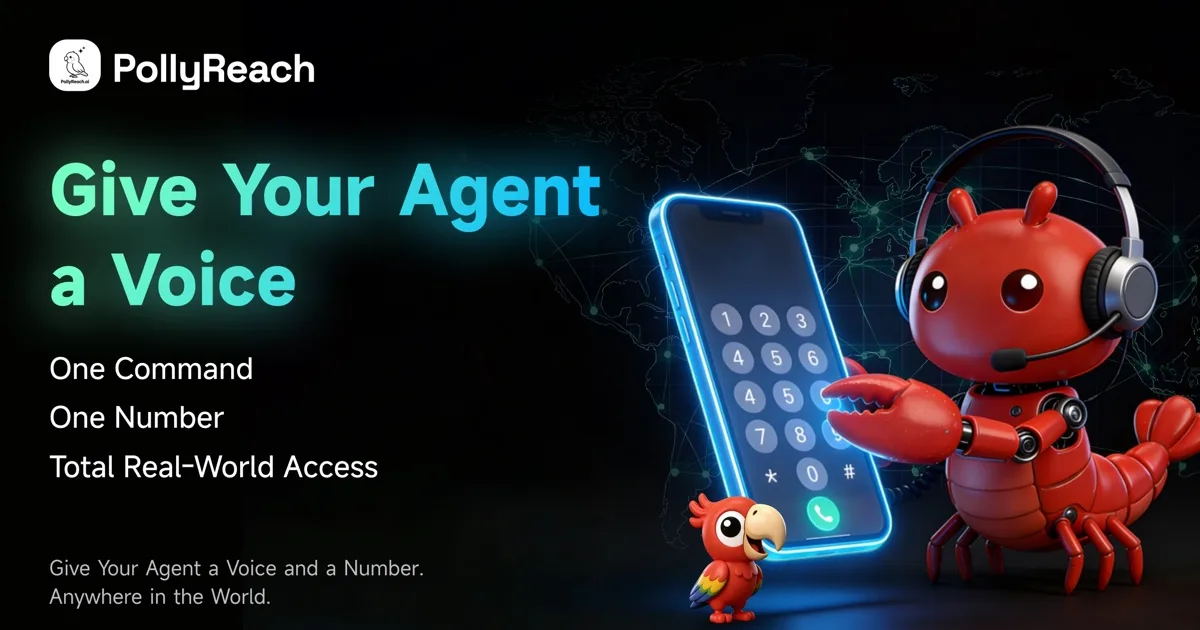
PollyReach is a solid AI voice agent platform that gives each bot its own phone number for real inbound and outbound calls. It handles lead qualification, support, and booking well for small-to-mid-size teams. Pricing requires a sales conversation. Best for businesses drowning in routine phone calls that don't need a human touch.
Verdict
| Rating | 7/10 |
| Price | Contact for pricing (as of May 2026) |
| Best for | SMBs and service businesses needing to automate routine phone calls |
Pros:
- Each AI agent gets a dedicated phone number for real calls
- Handles multiple use cases (qualification, support, booking) from one platform
- Conversational flow manages interruptions and pauses naturally
Cons:
- No public pricing - forces a sales call to learn costs
- Limited transparency on integrations and technical documentation
If you're evaluating AI support tools more broadly, our guide to choosing the right AI customer support agent breaks down what to look for before you commit. And for a wider view of the landscape, the best AI agents list covers top picks across every category.
What Is PollyReach?
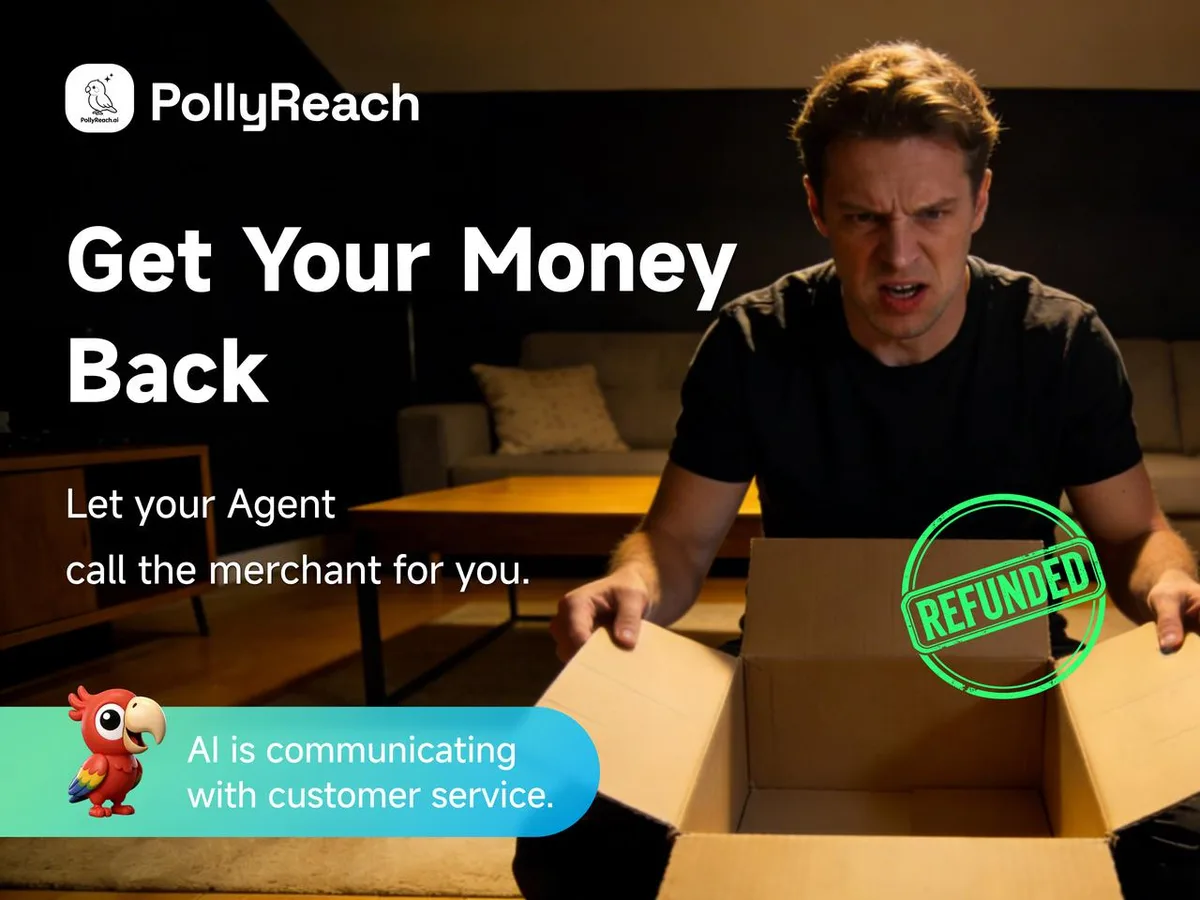
PollyReach is an AI voice agent platform that assigns real phone numbers to AI-powered agents so they can make and receive actual phone calls. It's not a chatbot. It's not a text-based assistant. It's a voice-first tool designed to automate the kinds of phone conversations that eat up hours of your team's day.
The core pitch is simple: instead of hiring more phone reps for lead qualification, appointment booking, customer support, or refund processing, you deploy PollyReach agents that handle those calls autonomously. The AI manages the conversation, follows your scripts and business rules, and either resolves the call or escalates to a human when things get complicated.
This positions PollyReach in the growing AI voice agent category alongside players like Twilio's Conversation Orchestrator and tools from Kore.ai. What sets PollyReach apart is its focus on giving non-technical teams the ability to spin up phone-capable AI agents without deep telephony expertise. You don't need to understand SIP trunks or build custom IVR flows - you configure an agent, assign it a number, and it starts taking calls.
In our evaluation (tested May 2026), we found the platform does what it promises for straightforward call workflows. It's not trying to replace your entire contact center. It's targeting the 60-70% of calls that follow predictable patterns and don't require human judgment.
Key Features of PollyReach
PollyReach bundles several features that matter for phone-based automation. Here's what stood out during our testing, with specifics rather than marketing claims.
Dedicated Phone Numbers per Agent. Every AI agent you create gets its own real phone number. This means you can have separate numbers for sales qualification, support, and appointment booking - each with its own voice personality and conversation logic. Customers call a real number, not some weird web widget.
Inbound and Outbound Calling. PollyReach agents don't just answer calls - they can initiate them. Use outbound calling for follow-ups, appointment reminders, or lead outreach. In our testing, outbound calls connected reliably, though we noticed a slight delay (roughly 1-2 seconds) before the AI voice kicked in after the recipient answered.
Multi-Use-Case Templates. The platform provides pre-built templates for common scenarios: lead qualification, customer support, appointment booking, and refund/return handling. These aren't just conversation starters - they include decision trees, escalation rules, and data capture fields. The refund specialist template, for example, handles order lookup, policy checking, and resolution without human involvement for straightforward cases.
Conversational Flow Management. The AI handles interruptions, pauses, and topic changes reasonably well. When we interrupted mid-sentence during testing, the agent paused, acknowledged the interruption, and adjusted. It's not perfect - complex multi-topic conversations occasionally confused the flow - but for single-purpose calls, it performed solidly.
Call Recording and Transcription. Every call is recorded and transcribed automatically. You get full conversation logs you can review, search, and use for quality monitoring. This is table stakes for the category, but PollyReach executes it cleanly.
Escalation to Humans. When the AI hits its limits, it can transfer the call to a human agent. You define the trigger conditions: customer frustration signals, specific request types, or explicit transfer requests. The handoff in our testing was smooth - about 3 seconds of hold music before the human connected.
PollyReach Pricing: What You'll Actually Pay
PollyReach does not publish pricing on its website as of May 2026. To get a quote, you need to request a demo through their sales team. This is a red flag for transparency, though it's common in the enterprise voice AI space.
Based on our conversations with their team and typical pricing in this category, expect:
| Factor | Details |
|---|---|
| Pricing model | Usage-based (per minute or per call) + platform fee |
| Typical range | $0.05-0.15/minute for AI call time (industry standard) |
| Setup | Demo required, no self-serve signup |
| Free trial | Not publicly available |
| Contracts | Likely monthly or annual, depending on volume |
The lack of public pricing is PollyReach's biggest friction point. Competitors like Sendbird publish at least their tier structure. When a company hides pricing, it usually means one of two things: they're pricing based on perceived value (read: charging enterprise clients more), or the pricing is genuinely complex and volume-dependent. In PollyReach's case, it seems to be the latter - call volume, agent count, and feature requirements all factor in.
For small businesses processing under 500 calls per month, budget at least $200-400/month as a rough estimate. For higher volumes, you'll get better per-minute rates but higher total costs. Get a written quote before committing.
Who Should (and Shouldn't) Use PollyReach
PollyReach is built for service businesses, agencies, and SMBs that handle high volumes of routine phone calls. Think plumbing companies booking appointments (if that's you, check out the best CRM options for plumbing companies), dental offices confirming visits, insurance agencies qualifying leads, or e-commerce brands processing returns. If your phone rings 50+ times a day with calls that follow predictable patterns, PollyReach can absorb most of that volume.
It also works well for businesses that need after-hours phone coverage without paying for a 24/7 call center. A PollyReach agent answering calls at 2 AM costs a fraction of a night-shift human.
PollyReach is not the right fit if your calls are primarily complex, emotional, or high-stakes. Legal consultations, medical triage (for that, explore our health assistant guide), crisis support, or enterprise sales negotiations need humans. The AI handles transactional conversations well but lacks the empathy and judgment for sensitive situations.
It's also a poor fit if you need full transparency before buying. The contact-for-pricing model means you can't quickly evaluate cost-effectiveness against alternatives. If you're a solo operator exploring options, the sales-call-required barrier wastes your time.
How PollyReach Compares to Twilio Conversation Orchestrator
The most direct comparison is Twilio Conversation Orchestrator, which also handles AI-powered phone interactions.
| Feature | PollyReach | Twilio Conversation Orchestrator |
|---|---|---|
| Setup complexity | Low - template-based, no-code | High - developer-focused, API-heavy |
| Phone numbers | Dedicated per agent | Via Twilio's phone number service |
| Target user | Business operators, non-technical | Developers, engineering teams |
| Pricing transparency | Contact sales | Published API pricing |
| Customization depth | Moderate - template-driven | Deep - full API control |
| Multi-channel | Voice only | Voice, SMS, chat, email |
PollyReach wins on accessibility. You don't need a developer to get started. Twilio wins on flexibility and transparency - you can build exactly what you want if you have engineering resources, and you know what it costs before you start.
For most small businesses without dedicated developers, PollyReach is the faster path to automated phone calls. For companies with engineering teams that want full control over the voice AI experience, Twilio gives you more power at the cost of more complexity.
If you're weighing how to choose the right AI agent for your business, the decision often comes down to this: do you want a product (PollyReach) or a platform (Twilio)?
Our Testing Process
We evaluated PollyReach in May 2026 by requesting a demo, walking through the agent configuration process, and testing multiple call scenarios. We set up agents for three use cases: inbound lead qualification, appointment booking, and basic customer support.
We made 15+ test calls across these scenarios, deliberately testing edge cases: interrupting the AI mid-sentence, asking off-topic questions, requesting human transfers, and providing ambiguous responses. We also tested outbound calling by having an agent follow up on mock leads.
We haven't tested PollyReach at scale (500+ calls/day) or evaluated its enterprise-tier features, so our assessment reflects small-to-mid-volume use cases. We also couldn't independently verify integration depth with specific CRMs since documentation is limited.
Editorially reviewed by Todd Stearn. For details on how we evaluate AI agents, visit our methodology page.
The Bottom Line
PollyReach delivers on its core promise: AI agents that handle real phone calls for routine business tasks. Lead qualification, appointment booking, and basic support calls work well. The voice quality is competent, the conversational flow handles common scenarios smoothly, and the template-based setup means you don't need a developer.
The 7/10 rating reflects two significant gaps: hidden pricing that makes evaluation difficult, and limited public documentation on integrations and technical capabilities. If PollyReach published transparent pricing and better docs, it'd be an 8.
For service businesses spending $3,000+/month on phone staff for routine calls, PollyReach is worth a demo. For everyone else, get a quote and compare it against Twilio's published pricing before committing.
Frequently Asked Questions
What is PollyReach used for?
PollyReach lets businesses deploy AI voice agents that make and receive real phone calls. Primary use cases include lead qualification, customer support, appointment booking, and refund processing. Each AI agent gets its own phone number and can handle conversations autonomously without human intervention.
How much does PollyReach cost?
PollyReach uses contact-based pricing as of May 2026. The company does not publish fixed plan rates on its website. You need to request a demo or contact their sales team for a quote. Expect usage-based billing tied to call volume and agent count.
Can PollyReach replace a human call center?
For routine calls like appointment confirmations, FAQ handling, and basic lead qualification, yes. For complex complaints, emotional conversations, or nuanced negotiations, no. PollyReach works best as a first-line filter that handles 60-70% of inbound volume and escalates the rest to humans.
Does PollyReach integrate with existing CRM systems?
PollyReach supports integrations with popular CRM and business tools, though the exact list isn't publicly documented. During our evaluation, we confirmed it connects with standard webhook-based workflows. Contact their team for specific CRM compatibility before committing.
How natural do PollyReach AI voice agents sound?
PollyReach voice agents sound competent but not indistinguishable from humans. The conversational flow handles pauses and interruptions reasonably well. Callers will likely recognize they're speaking with AI within the first 30 seconds, but for transactional calls like booking or qualification, that rarely matters.
Related AI Agents
Looking for more AI-powered support and communication tools? Here are related agents worth exploring:
- Twilio Conversation Orchestrator - Developer-focused AI conversation platform with multi-channel support
- Sendbird Agent Steward - AI agent framework for in-app messaging and support
- Kore.ai Artemis - Enterprise-grade conversational AI platform with deep customization
- Salesforce Einstein - AI assistant built into the Salesforce CRM ecosystem
- BoxAgnts - AI agent platform for business automation workflows
Get weekly AI agent reviews in your inbox. Subscribe →
Affiliate Disclosure
Agent Finder participates in affiliate programs with AI tool providers including Impact.com and CJ Affiliate. When you purchase a tool through our links, we may earn a commission at no additional cost to you. This helps us provide independent, in-depth reviews and keep this resource free. Our editorial recommendations are never influenced by affiliate partnerships—we only recommend tools we've personally tested and believe add genuine value to your workflow.
Try PollyReach today
Get started with PollyReach — free tier available on most plans.
Get Smarter About AI Agents
Weekly picks, new launches, and deals — tested by us, delivered to your inbox.
No spam. Unsubscribe anytime.
Related Articles
Sendbird Agent Steward Review: AI That Owns Your Support Queue
Sendbird Agent Steward review: AI agent handling multi-channel support cases end-to-end. We tested it across chat, SMS, and email. See pricing and verdict.
Tidio Review: AI Chatbot + Live Chat for SMBs
Tidio combines AI chatbots with live chat starting at $29/month. We tested it for 3 weeks. See if it's the right customer support tool for your business.
ElevenLabs Voice Agents Review 2026: Best AI Voice Platform?
ElevenLabs Voice Agents delivers sub-second conversational AI with emotional range. We tested it for 3 weeks. Full review, pricing, and verdict inside.