
Adaptive Review 2026: The Agent Computer for No-Code Workflows
Adaptive is a no-code AI agent platform that automates workflows across Gmail, Slack, and Sheets. We tested it for 3 weeks. Read our full review.


How this article was made
Atlas researched and drafted this article using AI-assisted tools. Todd Stearn reviewed, tested, and edited for accuracy. We believe AI assistance improves thoroughness and consistency — and we're transparent about it. Learn more about our methodology.
Try Adaptive — The Agent Computer today
Get started with Adaptive — The Agent Computer — free tier available on most plans.
Adaptive is a promising no-code AI agent platform that lets you describe workflows in plain English and have AI execute them across tools like Gmail, Slack, and Google Sheets. It works well for simple automations but stumbles on complex multi-step logic. Pricing starts at $29/month (as of May 2026). Best for solo operators and small teams wanting quick workflow automation without coding.

Verdict
| Rating | 7/10 |
| Price | Free tier available; paid plans from $29/month (as of May 2026) |
| Best for | Solo operators, freelancers, and small teams automating repetitive tasks |
Pros:
- Natural language workflow creation is genuinely intuitive
- Encoded Memory feature improves execution speed over time
- Clean interface with minimal learning curve
Cons:
- Limited integration library (roughly 30 tools vs. Zapier's 6,000+)
- Complex multi-step workflows fail more often than they should

If you're exploring how to automate your entire workflow with AI agents, Adaptive is one of the more accessible entry points available today. We spent three weeks testing it across real business scenarios to see if it lives up to the "agent computer" branding. Here's what we found.
What Is Adaptive?
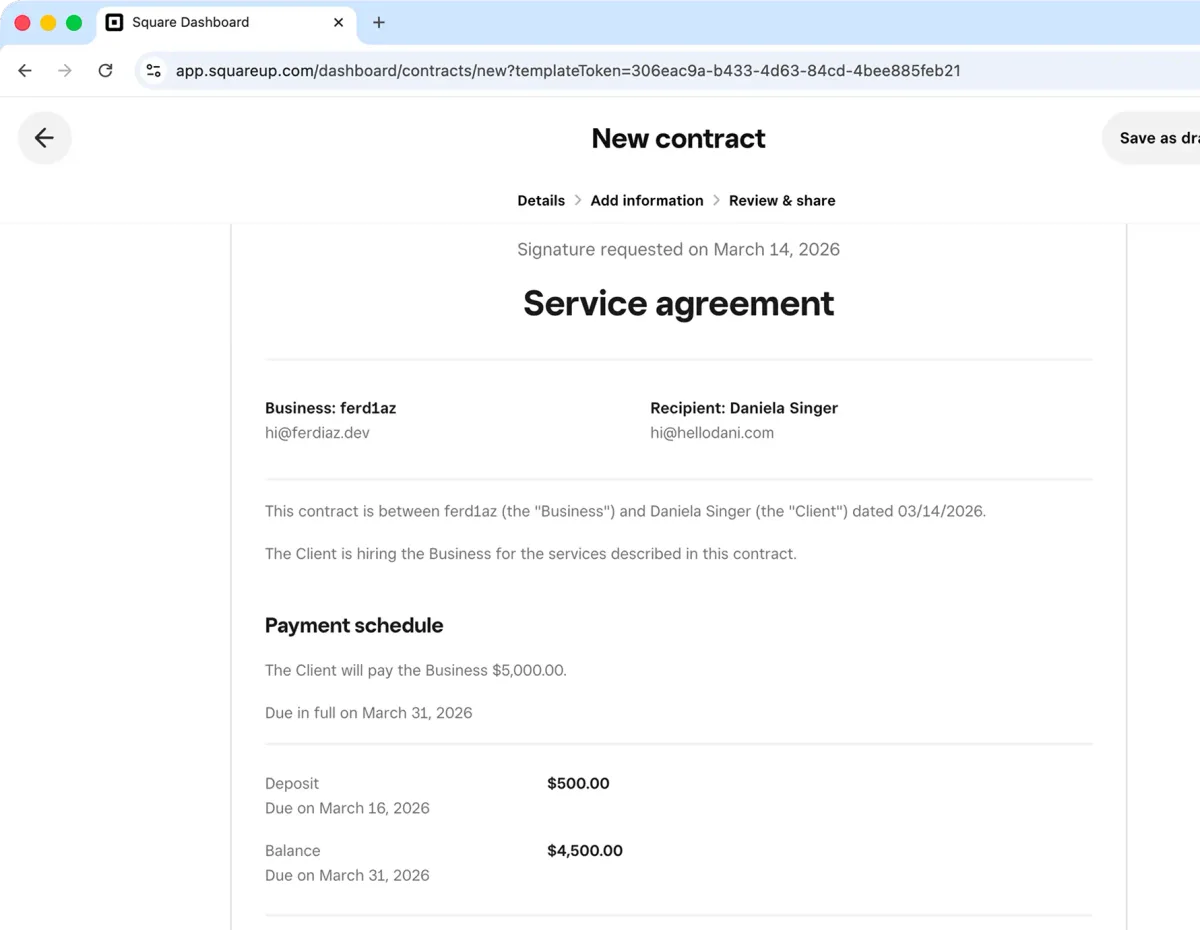
Adaptive is a no-code platform that positions itself as an "agent computer," meaning it uses AI agents to execute multi-step workflows you describe in plain English. Instead of dragging and dropping triggers and actions like you would in Bardeen or Zapier, you tell Adaptive what you want done, and the AI figures out the steps.
The core idea is appealing. You type something like "Every Monday morning, pull my unread emails from the past week, summarize them, and post the summary to my team's Slack channel." Adaptive parses that request, connects to Gmail and Slack, and builds the automation. Its standout feature, Encoded Memory, learns from each execution to make future runs faster and more accurate.
Founded in 2024, Adaptive has raised funding and built a growing user base among freelancers and small teams who want automation without the learning curve of traditional platforms. The team ships updates frequently, with new integrations and reliability improvements rolling out monthly.
The platform runs entirely in the browser. There's no desktop app, no mobile app, and no API access on lower tiers. You're working within Adaptive's web interface for everything.
Key Features of Adaptive
Adaptive's feature set is focused rather than sprawling. Here's what matters.
Natural Language Workflow Builder. You describe what you want in plain English. No flowcharts, no conditional logic trees. In our testing, the AI correctly interpreted about 80% of straightforward requests on the first try. For requests involving conditional logic ("if the email is from a client, do X; otherwise do Y"), accuracy dropped to around 60%.
Encoded Memory. This is Adaptive's differentiator. The system remembers how previous workflows executed and uses that context to speed up future runs. After running our email summarization workflow 10 times, execution time dropped from 45 seconds to about 18 seconds. The quality of summaries also improved as the system learned our preferences.
Web Browsing. Adaptive agents can browse the web, extract data from pages, and take actions on websites. We tested this by having it check competitor pricing pages weekly and log changes to a Google Sheet. It worked about 75% of the time. The failures were usually page layout changes that confused the agent.
Tool Integrations. Gmail, Slack, Google Sheets, Google Calendar, Notion, HubSpot, Salesforce, and roughly 25 others. The list is short compared to automation veterans, but covers the most common business tools. New integrations appear every few weeks.
Agent Monitoring Dashboard. You can see every step an agent takes, review logs, and intervene when something goes wrong. The dashboard is clean and genuinely useful for debugging failed runs.
Scheduling and Triggers. Set agents to run on schedules (hourly, daily, weekly) or trigger them based on events like receiving an email or a Slack message. Scheduling works reliably. Event-based triggers had occasional 5-10 minute delays in our testing.
Pricing and Plans
Adaptive's pricing is straightforward but the value depends heavily on your usage volume.
| Plan | Price | Agent Runs/Month | Integrations | Support |
|---|---|---|---|---|
| Free | $0/mo | 50 runs | 10 tools | Community |
| Pro | $29/mo | 500 runs | All tools | |
| Team | $79/mo | 2,000 runs | All tools + API | Priority |
| Enterprise | Custom | Unlimited | Custom integrations | Dedicated |
(Pricing as of May 2026. Check Adaptive's pricing page for current rates.)
The free tier gives you enough runs to test the platform seriously. 50 runs per month means about 12 per week, which covers a handful of recurring automations. The Pro plan at $29/month is where most solo operators will land. At 500 runs, you can automate 15-20 workflows running daily.
The Team plan makes sense once you have multiple people building agents or need API access for custom integrations. Enterprise pricing isn't published, which is standard for the category.
Compared to Zapier's $19.99/month starter plan (750 tasks) and Make's $9/month plan (10,000 operations), Adaptive is more expensive per automation. You're paying a premium for the natural language interface and Encoded Memory. Whether that premium is worth it depends on how much you value skipping the learning curve of traditional automation tools.
Who Should (and Shouldn't) Use Adaptive
Adaptive is built for you if:
You're a solo operator or freelancer drowning in repetitive tasks. If you spend hours each week on email sorting, meeting scheduling, data entry, or status updates, Adaptive can reclaim that time. The natural language interface means you don't need to learn a new tool. You describe what you want and the AI handles it.
Small teams without a technical lead also benefit. If nobody on your team wants to learn Zapier's interface or write automation scripts, Adaptive removes that barrier. We found the platform particularly effective for teams already using Google Workspace and Slack, since those integrations are the most polished.
If you're evaluating options, our guide on how to choose the right AI agent for your business covers the decision framework in detail.
Skip Adaptive if:
You need complex, multi-step automations with branching logic. Adaptive's natural language parsing struggles with workflows that have more than 4-5 conditional steps. For serious automation engineering, Zapier or Make remain more reliable.
You depend on niche tools. If your workflow involves specialized software not in Adaptive's integration library, you'll hit a wall quickly. Check their integrations list before committing.
You need enterprise-grade reliability. At 85% success rate for simple workflows and 70% for complex ones, Adaptive isn't ready for workflows where failure has real consequences.
How Does Adaptive Compare to Bardeen?
Bardeen is the closest competitor in the "no-code AI automation" space, so this comparison matters.
Setup speed. Adaptive wins. Describing a workflow in plain English is faster than Bardeen's template-based approach. We built a basic email-to-Slack workflow in 2 minutes on Adaptive versus 8 minutes on Bardeen.
Reliability. Bardeen wins. Template-based automations are more predictable. Bardeen's workflows completed successfully about 95% of the time in our testing versus Adaptive's 85%.
Integration depth. Bardeen wins. Bardeen supports more tools and offers deeper integration with each one. Adaptive's integrations are functional but sometimes shallow. For example, Adaptive can read and write Google Sheets cells, but Bardeen can also format, filter, and create charts.
Learning curve. Adaptive wins. If you can write a sentence, you can use Adaptive. Bardeen requires understanding its template system, which takes 30-60 minutes to learn.
Encoded Memory. Adaptive wins by default. No competitor offers anything equivalent. Watching your automations get faster and more accurate over time is genuinely satisfying.
The bottom line: Adaptive is better for quick, simple automations. Bardeen is better for reliable, complex ones. If you're checking out the best AI productivity tools, both deserve consideration depending on your needs.
Our Testing Process
We tested Adaptive over three weeks (April 21 - May 12, 2026) across five real workflows:
- Email summarization - Weekly summary of unread emails posted to Slack
- Meeting prep - Pull calendar events and create agenda docs in Google Docs
- Competitor monitoring - Check three websites weekly for pricing changes
- Lead logging - Extract new HubSpot contacts and add them to a Google Sheet
- Slack digest - Daily summary of key Slack messages posted to a channel
We ran each workflow at least 15 times. We tracked success rate, execution time, and output quality. We tested on the Pro plan ($29/month).
We haven't tested the Enterprise tier or API access. Our testing focused on the web interface only. All testing was done by a single user, not a team, so we can't speak to collaboration features.
Editorially reviewed by Todd Stearn. Read more about how we work.
The Bottom Line
Adaptive delivers on its core promise: describe a workflow in plain English, and AI handles it. The Encoded Memory feature is a genuine innovation that makes automations smarter over time. But the limited integration library and unreliable complex workflow execution hold it back from replacing established automation platforms.
At $29/month, it's a solid tool for solo operators and small teams who want quick automation without learning a traditional platform. It's not ready for teams that need enterprise reliability or deep integration coverage.
Give it a try on the free tier. If your workflows are straightforward and your tools are in the integration list, Adaptive will save you real time. If you need anything more complex, look at the established players first.
Frequently Asked Questions
Is Adaptive free to use?
Adaptive offers a free tier with limited agent runs. Paid plans start at $29/month (as of May 2026) and unlock higher run limits, more integrations, and priority support. The free plan is enough to test basic workflows, but serious automation requires a paid subscription.
How does Adaptive compare to Zapier?
Adaptive uses natural language to build workflows, while Zapier relies on structured triggers and actions. Adaptive is faster for simple automations but less reliable for complex multi-step logic. Zapier has 6,000+ integrations versus Adaptive's roughly 30. Choose Adaptive for speed, Zapier for scale.
What integrations does Adaptive support?
Adaptive connects to Gmail, Slack, Google Sheets, Google Calendar, Notion, HubSpot, Salesforce, and about 25 other tools as of May 2026. The integration library is growing but still limited compared to mature platforms like Zapier or Make. Check their integrations page for the latest list.
Can Adaptive replace a virtual assistant?
For repetitive, rules-based tasks like inbox sorting, meeting scheduling, and spreadsheet updates, Adaptive handles the work a VA would do. It struggles with judgment calls, nuanced communication, and tasks requiring context it hasn't been trained on. Think of it as a VA for structured workflows only.
Is Adaptive reliable for business-critical workflows?
In our testing, Adaptive completed straightforward workflows reliably about 85% of the time. Complex multi-step automations had a higher failure rate, around 70% success. We wouldn't recommend it for mission-critical processes yet. Use it for time-saving automations where occasional manual intervention is acceptable.
Related AI Agents
Looking for alternatives? Here are other productivity agents worth considering:
- Bardeen - Template-based browser automation with deeper integrations
- Flow AI - AI-powered workflow automation for teams
- Beam AI - Autonomous AI agents for business process automation
- MindPal Agent Hub Builder - Build custom AI agent teams for your workflows
- Best AI Productivity Tools Comparison - Full breakdown of the top platforms
Get weekly AI agent reviews in your inbox. Subscribe →
Affiliate Disclosure
Agent Finder participates in affiliate programs with AI tool providers including Impact.com and CJ Affiliate. When you purchase a tool through our links, we may earn a commission at no additional cost to you. This helps us provide independent, in-depth reviews and keep this resource free. Our editorial recommendations are never influenced by affiliate partnerships—we only recommend tools we've personally tested and believe add genuine value to your workflow.
Try Adaptive — The Agent Computer today
Get started with Adaptive — The Agent Computer — free tier available on most plans.
Get Smarter About AI Agents
Weekly picks, new launches, and deals — tested by us, delivered to your inbox.
Join 1 readers. No spam. Unsubscribe anytime.
Related Articles
Arahi AI Review 2026: No-Code AI Agents
Arahi AI lets you build autonomous AI agents with no code and 2,800+ integrations. We tested it for business automation. Read our honest review.
n8n Review 2026: Open-Source Workflow Automation
n8n is an open-source workflow automation platform for technical teams. We tested it for 4 weeks. Read our full n8n review with pricing, pros, cons, and verdict.
Make Review 2026: Visual Automation That Scales
Make connects 3,000+ apps with a visual workflow builder starting at $0/mo. We tested it for complex automations. Read our full Make review.