
Lovable Review 2026: AI App Builder That Ships
Lovable turns plain English into full-stack web apps. We tested it for 3 weeks building real projects. Read our honest Lovable review and see pricing.


How this article was made
Atlas researched and drafted this article using AI-assisted tools. Todd Stearn reviewed, tested, and edited for accuracy. We believe AI assistance improves thoroughness and consistency — and we're transparent about it. Learn more about our methodology.
Try Lovable today
Get started with Lovable — free tier available on most plans.
Lovable is the best AI app builder for non-technical founders who need a working MVP fast. It converts plain-English descriptions into full-stack React + Supabase web apps with authentication, databases, and polished UI—all in minutes. Pricing starts at $20/month. Best for SaaS prototypes, internal tools, and MVPs where speed matters more than custom architecture.
Verdict Box
Rating: 8/10 Price: Free tier available; paid plans from $20/month (as of March 2026) Best For: Non-technical founders, indie hackers, and small teams building MVPs or internal tools
Pros:
- Generates complete full-stack apps from natural language in minutes
- UI design quality surpasses every competitor we tested
- Full code export via GitHub—you own everything
Cons:
- Message credits burn fast on complex, iterative projects
- Struggles with intricate custom backend logic beyond standard CRUD
Try Lovable Free →

If you're exploring AI-powered development tools and wondering whether Lovable lives up to the hype, this review covers three weeks of hands-on building. We shipped four real projects—a SaaS dashboard, a booking tool, a CRM, and a landing page—to stress-test every claim Lovable makes.

What Is Lovable?
Lovable is an AI-powered full-stack development platform that turns natural language prompts into complete, deployable web applications. Think of it as having a senior full-stack developer who works in seconds instead of weeks.
Founded in 2024 (originally as GPT Engineer), Lovable rebranded and rapidly became the go-to tool for people who have app ideas but lack the engineering team to execute them. The platform handles everything: React frontend, Supabase backend, PostgreSQL database, authentication, file storage, and one-click deployment.
You don't write code. You describe your app in plain English. "Build me a project management tool with user authentication, a Kanban board, and team collaboration features." Lovable generates the entire application—routes, components, database schema, API calls—and renders a live preview you can interact with immediately.
The key differentiator isn't just code generation. Plenty of tools do that. Lovable's edge is the iterative conversation. You refine your app through follow-up prompts: "Make the sidebar collapsible," "Add dark mode," "Connect Stripe for payments." Each prompt modifies the existing codebase intelligently rather than regenerating from scratch.
This conversational approach makes Lovable feel less like a tool and more like a collaborator. During our testing, we found the iteration loop surprisingly tight—most refinements took under 30 seconds to apply.

What Are Lovable's Key Features?
Lovable packs more full-stack capability into a single prompt box than any AI builder we've tested. Here's what actually matters after three weeks of daily use.
Natural Language App Generation Describe your app, get a working app. Not a wireframe. Not a mockup. A functioning application with real routing, state management, and styled components. In our testing, a detailed 3-paragraph prompt produced a fully navigable SaaS dashboard with 6 pages in 47 seconds.
Supabase Backend Integration Lovable connects directly to Supabase for database, authentication, row-level security, and file storage. One prompt—"Add user authentication with Google sign-in"—created the full auth flow: login page, signup page, protected routes, session management, and database user table. This integration alone saves days of development work.
Real-Time Visual Editing Every change renders instantly in a live preview panel. You see your app as users will see it while you're building. No deploy step. No refresh. Click elements to select them, then describe changes in context. "Make this button bigger and blue" works exactly as you'd expect.
GitHub Integration & Code Export Connect your GitHub account and Lovable pushes clean, readable code to your repository after every change. The generated React code uses modern patterns—functional components, hooks, Tailwind CSS. We reviewed the output code extensively. It's not perfect, but it's better than what many junior developers produce.
One-Click Deployment Publish directly to a Lovable subdomain or connect your custom domain. The deployment pipeline handles building, optimizing, and hosting. Zero DevOps knowledge required. Our test apps loaded in under 2 seconds on Lighthouse audits.
Stripe & Third-Party Integrations Payment integration works through prompts: "Add Stripe checkout for a $29/month subscription." Lovable generated the pricing page, checkout flow, and webhook handlers. It also supports integrating with external APIs, though complex integrations sometimes needed prompt refinement.
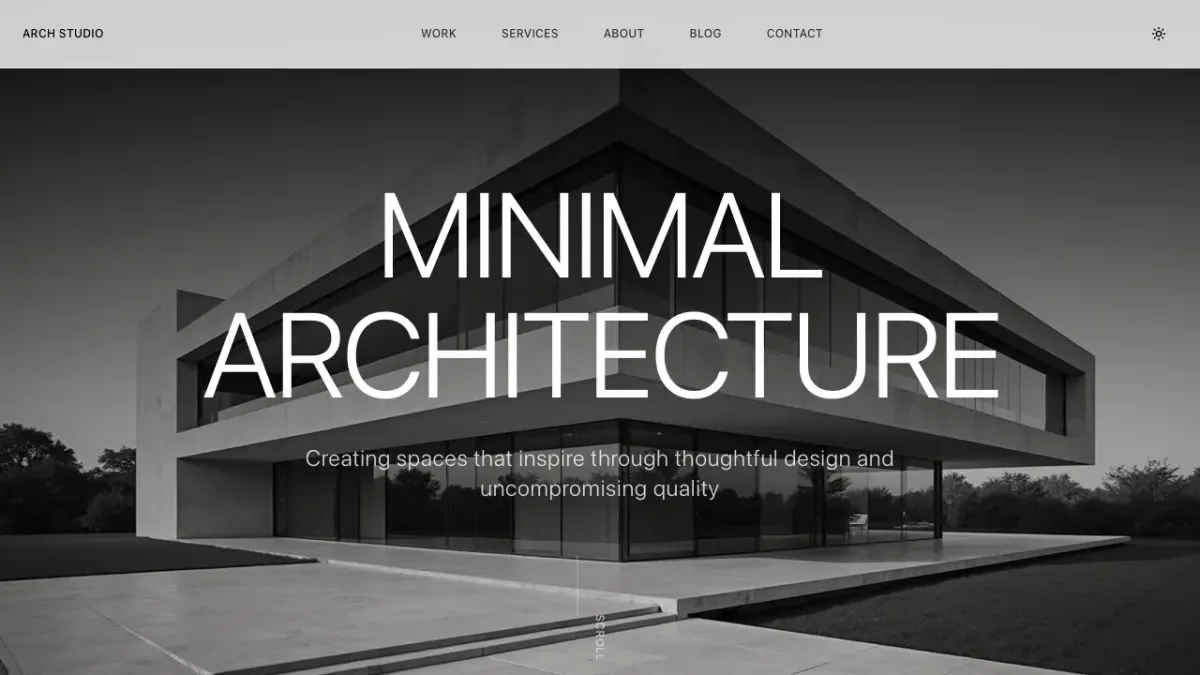
Design Quality This is where Lovable genuinely separates from competitors. The default UI output is polished—clean typography, proper spacing, responsive layouts, subtle animations. We compared identical prompts across Lovable, Bolt, and Replit Agent. Lovable's designs looked production-ready. The others looked like prototypes.
How Much Does Lovable Cost?
Lovable's pricing uses a credit-based system where each AI message consumes credits. Here's the breakdown as of March 2026, verified against the official pricing page:
| Plan | Price | Message Credits | Key Features |
|---|---|---|---|
| Free | $0/mo | 5 messages/day | Basic app generation, community support |
| Starter | $20/mo | 100 messages/mo | GitHub export, custom domains, Supabase integration |
| Launch | $50/mo | 250 messages/mo | Priority generation, advanced integrations, faster builds |
| Scale | $100/mo | 500+ messages/mo | Team collaboration, priority support, higher rate limits |
The real cost question: How fast do credits burn?
In our testing, building a medium-complexity SaaS app (dashboard, auth, database, 8 pages) consumed approximately 45-60 messages from initial prompt through refinement. That means the Starter plan gets you roughly 1.5-2 complete app builds per month. The Launch plan handles 4-5 projects comfortably.
Simple landing pages and single-feature tools used 10-15 messages. Complex apps with payment integration, real-time features, and role-based access pushed past 80 messages.
The free tier is genuinely useful for evaluation. Five messages per day lets you build a basic app in a single session. But you'll hit the wall fast if you're iterating on anything ambitious.
Our take: The $50/month Launch plan offers the best value for active builders. The Starter plan works if you're building one project at a time and don't mind waiting between iterations.
Who Should (and Shouldn't) Use Lovable?
Lovable is built for you if:
- You're a non-technical founder with an app idea and need an MVP in days, not months
- You're an indie hacker validating ideas quickly before committing development resources
- You're building internal tools for your team and don't want to hire a developer
- You're a designer who wants to turn mockups into functional prototypes instantly
- You're a developer who wants to skip boilerplate and scaffold projects in minutes
Lovable is NOT for you if:
- You're building apps requiring complex custom backend logic (machine learning pipelines, real-time multiplayer, custom algorithms)
- You need pixel-perfect control over every CSS property and component behavior
- Your project requires technology stacks outside React + Supabase (Django, Rails, native mobile)
- You're an experienced developer who prefers writing code in a full IDE environment—tools like Genspark might suit different workflow needs
- You're building at enterprise scale with strict compliance, audit requirements, and multi-region deployment
The sweet spot is clear: Lovable excels at standard web applications with CRUD operations, user authentication, dashboards, forms, and content management. Step outside that pattern, and you'll fight the tool more than it helps you.
How Does Lovable Compare to Bolt and Replit Agent?
Lovable's closest competitors are Bolt (by StackBlitz) and Replit Agent. We tested all three with identical prompts to see who wins.
| Feature | Lovable | Bolt | Replit Agent |
|---|---|---|---|
| UI Design Quality | ★★★★★ | ★★★☆☆ | ★★★☆☆ |
| Backend Integration | ★★★★☆ | ★★★☆☆ | ★★★★☆ |
| Code Editability | ★★★☆☆ | ★★★★☆ | ★★★★★ |
| Speed to First Build | ★★★★★ | ★★★★☆ | ★★★☆☆ |
| Iteration Quality | ★★★★☆ | ★★★☆☆ | ★★★★☆ |
| Pricing (Value) | ★★★★☆ | ★★★☆☆ | ★★★★☆ |
Lovable vs. Bolt: Lovable produces significantly better-looking applications from the same prompt. Bolt gives you more direct access to edit code in-browser, which appeals to developers. For non-coders, Lovable wins decisively. For developers who want AI-assisted coding with full control, Bolt is stronger.
Lovable vs. Replit Agent: Replit Agent operates inside a full IDE, which means you can modify any file, run terminal commands, and install packages manually. Lovable abstracts all of that away. If you want to ship fast without touching code, Lovable wins. If you want to learn, customize deeply, or handle complex backend work, Replit Agent is more capable.
The verdict: Lovable is the best choice for speed and design quality. It's the tool you recommend to a founder who says "I have an idea but I can't code." Replit Agent is the tool you recommend to someone learning to code who wants AI assistance.

How We Tested Lovable
We used Lovable daily for three weeks (February 20 – March 12, 2026) on the Launch plan ($50/month). We built four complete projects:
- SaaS Dashboard — Analytics platform with user auth, data visualization, and team roles (62 messages)
- Booking Tool — Appointment scheduler with calendar integration, email notifications, and Stripe payments (78 messages)
- Simple CRM — Contact management with pipeline view, activity logging, and CSV import (41 messages)
- Landing Page — Marketing site with pricing table, testimonials, and newsletter signup (12 messages)
For each project, we evaluated: time to first working version, number of iterations needed, code quality (reviewed manually), performance (Lighthouse scores), and design polish.
We also tested edge cases: contradictory prompts, requests for unsupported features, complex state management, and multi-step workflows. Lovable handled ambiguity better than expected—asking clarifying questions rather than generating broken code.
We exported all code to GitHub and reviewed it for readability, maintainability, and security practices. The code passed our review with minor issues: occasional unused imports, some overly verbose component structures, and inconsistent error handling patterns.
We haven't tested the Scale plan's team collaboration features or enterprise support responsiveness. This review reflects solo builder experience.
The Bottom Line
Lovable is the fastest path from idea to working web app that exists today. It won't replace a senior engineering team, and it won't build the next Figma. But for MVPs, internal tools, SaaS prototypes, and landing pages, nothing else gets you from zero to deployed this quickly with this level of polish.
The $50/month Launch plan pays for itself if it saves you even two hours of development time. For non-technical founders, it eliminates the most painful bottleneck in starting a software business: building the first version.
Rating: 8/10 — A genuinely transformative tool with clear limitations. Excellent for its target audience, frustrating if you push beyond standard web app patterns.
Try Lovable Free →
Frequently Asked Questions
Can Lovable build production-ready apps?
Yes, Lovable generates production-ready web applications with React frontends, Supabase backends, authentication, and database integration. The output code is clean and deployable. However, complex enterprise apps with custom business logic still need developer refinement. For MVPs, internal tools, and SaaS prototypes, the production quality is genuinely impressive.
How much does Lovable cost per month?
Lovable offers a free tier with limited message credits. The Starter plan costs $20/month with more credits and basic features. The Launch plan at $50/month suits serious builders with higher limits. Teams needing collaboration and priority support pay $100/month for the Scale plan (as of March 2026).
Do I need coding experience to use Lovable?
No coding experience is required to build apps with Lovable. You describe what you want in plain English, and Lovable generates the full application. That said, basic understanding of web concepts like databases, APIs, and authentication helps you write better prompts and troubleshoot issues faster.
How does Lovable compare to Bolt and Replit?
Lovable produces more polished UI designs out of the box than Bolt or Replit Agent. Bolt offers more granular code control. Replit provides a full IDE environment for deeper customization. Lovable wins on speed-to-launch and design quality. Replit wins for developers who want to edit code directly.
Can I export and self-host Lovable apps?
Yes, Lovable lets you connect to GitHub and export your full source code. You own the code entirely and can self-host on any platform—Vercel, Netlify, AWS, or your own server. This is a major advantage over locked-in no-code platforms where migration means rebuilding from scratch.
Related AI Agents
- Genspark — AI-powered search and research agent for deep information gathering
- Bolt — AI app builder with in-browser code editing for developers who want more control
- Replit Agent — Full IDE experience with AI assistance for learning and building complex apps
- Cursor — AI-powered code editor for developers who prefer writing code with AI pair programming
- V0 by Vercel — AI UI generation tool focused specifically on frontend component design
Tested February–March 2026 on the Launch plan ($50/month). Editorially reviewed by Todd Stearn.
Get weekly AI agent reviews in your inbox. Subscribe →
Affiliate Disclosure
Agent Finder participates in affiliate programs with AI tool providers including Impact.com and CJ Affiliate. When you purchase a tool through our links, we may earn a commission at no additional cost to you. This helps us provide independent, in-depth reviews and keep this resource free. Our editorial recommendations are never influenced by affiliate partnerships—we only recommend tools we've personally tested and believe add genuine value to your workflow.
Try Lovable today
Get started with Lovable — free tier available on most plans.
See how Lovable compares:
Get Smarter About AI Agents
Weekly picks, new launches, and deals — tested by us, delivered to your inbox.
Join 1 readers. No spam. Unsubscribe anytime.
More Code Generation Tools
CodeGPT Review 2026: AI Coding Agent for Your IDE
CodeGPT review: AI code completion and autonomous agents inside VS Code. Free tier, multi-model support, $9.99/mo Pro. We tested it for 2 weeks.
Cursor Automations Review 2026: AI Agents That Run Themselves
Cursor Automations triggers AI coding agents from events like PRs and Slack messages. We tested it for code review, security audits, and bug triage. Full review.
Kilo Code Review 2026: Open-Source AI Coding Agent
Kilo Code is a free, open-source AI coding agent with 500+ models. We tested its parallel execution and subagent delegation. Read our full review.
Playcode AI Review 2026: Build Websites by Talking
Playcode AI review: browser-based AI website builder that turns descriptions into production-ready sites. Free plan available. See our honest verdict.
Related Articles
Replit Agent Review 2026: Build Full Apps Without Code
Replit Agent builds full-stack apps from plain English. We tested Agent 4 for three weeks. Read our honest review of pricing, features, and limitations.
BASE44 Review 2026: No-Code App Builder
BASE44 turns plain English into full-stack web apps. We tested it for 3 weeks. Read our honest review of pricing, features, and who it's actually for.
Zoer.ai Review 2026: AI Full-Stack App Builder
Zoer.ai builds complete web apps from text prompts. We tested its database, API, and frontend generation. Read our honest Zoer.ai review with pricing and verdict.