Pi AI Review 2026: Your Always-On AI Companion
Pi AI is a free personal AI companion built for conversation, emotional support, and advice. We tested it for 3 weeks. Read our honest Pi AI review.


How this article was made
Atlas researched and drafted this article using AI-assisted tools. Todd Stearn reviewed, tested, and edited for accuracy. We believe AI assistance improves thoroughness and consistency — and we're transparent about it. Learn more about our methodology.
Try Pi AI today
Get started with Pi AI — free tier available on most plans.
Pi AI is the best free conversational AI companion available in 2026. Built by Inflection AI, it delivers emotionally intelligent conversations that feel more human than any competitor. It's free with no usage limits. Best for anyone who wants an empathetic AI to talk through ideas, feelings, or daily life - not a productivity tool.
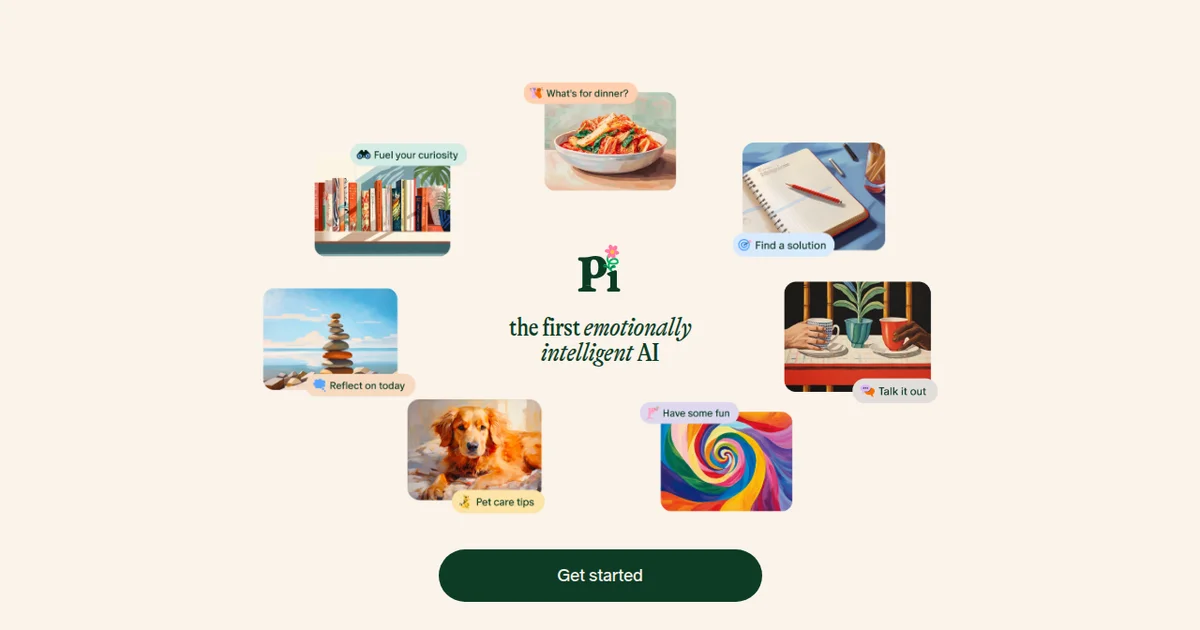
Rating: 7/10 Price: Free (as of March 2026) Best For: People seeking an empathetic AI conversation partner for emotional support, brainstorming, and casual advice
Pros:
- Genuinely warm, emotionally aware responses that don't feel robotic
- Completely free with no usage caps or paywalls
- Persistent memory that makes conversations feel continuous
Cons:
- Weak at structured tasks like writing documents or research
- No integrations, plugins, or tool-use capabilities
What Is Pi AI?
Pi AI is a personal AI companion built by Inflection AI, the company co-founded by Mustafa Suleyman (formerly of DeepMind) and Reid Hoffman. Unlike ChatGPT or Claude, which are designed as general-purpose assistants, Pi was purpose-built for one thing: conversation. Not task completion. Not code generation. Conversation.
That distinction matters more than you'd think. If you've been exploring what AI agents actually are, you know most tools focus on doing things for you. Pi focuses on being present with you. It's the difference between a Swiss Army knife and a good friend who listens.
Launched initially in 2023 and significantly upgraded through 2025 with Inflection's proprietary models, Pi now runs on what the company calls its Inflection 3.0 architecture. The result is a conversational AI that handles nuance, emotion, and ambiguity better than anything else on the market. It doesn't try to be everything. It tries to be one thing exceptionally well.
You can access Pi through its web app, iOS app, Android app, or even WhatsApp and Instagram DMs. There's no account required to start chatting, though creating one enables persistent memory across sessions.
Key Features of Pi AI
Pi AI's feature set is deliberately narrow. That's a strength, not a weakness. Here's what it actually does well.
Emotionally Intelligent Conversation. This is Pi's core differentiator. Ask it how your day went and it doesn't just acknowledge your answer - it asks follow-up questions that feel genuinely curious. Tell it you're stressed about a job interview and it responds with specific, thoughtful encouragement rather than generic platitudes. In our testing, Pi consistently outperformed ChatGPT and Claude at emotional attunement. It reads tone, validates feelings, and adjusts its energy to match yours.
Persistent Conversational Memory. Pi remembers what you've told it. Your name, your job, your partner's name, that you're training for a marathon, that you hate your commute. This memory carries across sessions and makes the 15th conversation feel fundamentally different from the first. It builds genuine rapport over time.
Multi-Platform Access. Web, iOS, Android, WhatsApp, Instagram DMs, and SMS. Pi meets you where you already are. The WhatsApp integration is particularly seamless - it feels like texting a real contact rather than interacting with a bot.
Voice Conversations. Pi supports voice input and output with natural-sounding speech. The voice mode is surprisingly fluid. Pauses feel natural rather than awkward. It's closer to talking with someone than talking at a machine.
Guided Self-Reflection. Pi doesn't just respond to questions. It proactively helps you think through problems by asking structured questions. Mention you're considering a career change and Pi will walk you through your motivations, fears, and practical considerations without telling you what to do. It's guided reflection, not advice dispensing.
Safe Boundaries. Pi consistently refuses to engage in harmful content, role-play romantic scenarios, or provide medical/legal advice beyond general information. It will suggest professional help when topics veer into clinical territory. This makes it meaningfully safer than open-ended AI models for vulnerable users.
What Pi doesn't have: no file uploads, no web browsing, no code execution, no plugins, no API access for consumers, no image generation. If you need those capabilities, you're looking at the wrong tool.
Pi AI Pricing and Plans
Pi AI is free. Completely, genuinely free as of March 2026.
| Feature | Pi AI | ChatGPT Free | Claude Free |
|---|---|---|---|
| Price | $0/mo | $0/mo | $0/mo |
| Usage Limits | None | Message caps | Message caps |
| Voice Mode | Included | Included | Not available |
| Memory | Persistent | Limited | Per-conversation |
| Web Search | No | Yes | No |
| File Upload | No | Limited | Limited |
There's no premium tier, no "Pi Plus," no upsell. Inflection AI makes money through enterprise licensing - they sell their models to other companies through Inflection for Enterprise. The consumer product is essentially a showcase and research platform.
This pricing model is both Pi's biggest advantage and its biggest risk. Free means zero friction to try it. But it also means Inflection could change the model at any time if enterprise revenue doesn't sustain development. For now, though, you're getting a remarkably polished product for nothing.
Who Should (and Shouldn't) Use Pi AI
Pi is perfect for you if:
You want an AI that feels like a conversation, not a command line. If you've tried ChatGPT and found it too transactional - too focused on delivering outputs rather than engaging in dialogue - Pi is the antidote. It's built for people who want to think out loud, process emotions, or just have someone to talk to during a quiet evening.
It's also excellent for people exploring AI for the first time. The interface is approachable. There are no settings to configure, no prompt engineering required, no learning curve. You just talk. For the audience that reads pieces like the family AI assistant guide, Pi is the most accessible entry point into AI companionship.
People dealing with mild loneliness, daily stress, or life transitions find real value here. Pi won't replace therapy, but it fills a genuine gap between "I'm fine" and "I need professional help."
Pi is not for you if:
You need an AI to do work. Pi can't write your marketing copy, debug your Python script, or summarize a 40-page PDF. If you need an AI agent for business tasks, look elsewhere. Pi is a companion, not an assistant.
You want factual accuracy for research. Pi sometimes gets facts wrong and doesn't cite sources. It has no web browsing capability. For information retrieval, ChatGPT or Perplexity are categorically better.
You want deep customization. There are no system prompts, no personas to configure, no temperature settings. Pi is Pi. You get what you get.
How Does Pi AI Compare to ChatGPT?
This is the comparison everyone wants, and the answer is straightforward: they're built for completely different purposes.
ChatGPT is a general-purpose AI assistant. It writes code, analyzes data, browses the web, generates images, and executes multi-step tasks. Pi AI does none of those things. Comparing them on productivity is like comparing a bicycle to a library - they solve different problems.
Where Pi decisively wins is emotional intelligence and conversational quality. In our three weeks of parallel testing, we had the same conversations with both tools - discussing a stressful week, talking through a relationship issue, brainstorming vacation ideas. ChatGPT responded with helpful, structured advice. Pi responded like a friend who was actually listening.
The difference shows up in small details. ChatGPT tends to front-load solutions. Tell it you're stressed and it gives you a numbered list of coping strategies. Pi asks what's making you stressed, validates the feeling, and lets you arrive at your own solutions. For some people, that list is exactly what they want. For others, Pi's approach is transformative.
Memory is another clear Pi advantage. ChatGPT's memory feature (available on paid plans) stores key facts but doesn't create the same sense of conversational continuity. Pi remembers not just what you said, but the emotional context around it. It references past conversations naturally rather than robotically.
Bottom line: Use ChatGPT when you need to get things done. Use Pi when you need to feel heard. They're complementary tools, not competitors.
If you're evaluating AI tools for different use cases, our review of Lindy AI covers a very different approach - a personal AI focused on automation rather than conversation.
Our Testing Process
We used Pi AI daily for three weeks, from late February through mid-March 2026. Testing happened across the web app, iOS app, and WhatsApp integration.
Our testing methodology included: casual daily check-ins (how's your day conversations), structured problem-solving sessions (career advice, relationship discussions, decision-making), factual accuracy checks (asking verifiable questions to test reliability), and emotional support scenarios (discussing stress, uncertainty, and difficult feelings).
We compared Pi's responses side-by-side with ChatGPT (GPT-4o) and Claude 3.5 Sonnet across all categories. We also tested memory retention by referencing details shared in earlier sessions to see if Pi recalled them accurately.
We did not test Pi's enterprise API or developer tools. This review covers the free consumer product only. Tested March 2026 on Inflection 3.0.
The Bottom Line
Pi AI is the most emotionally intelligent conversational AI you can use today, and it costs nothing. It's not trying to replace your search engine, your writing tool, or your coding assistant. It's trying to be a genuinely good conversation partner, and it succeeds. The persistent memory, warm tone, and thoughtful questioning create something that feels meaningfully different from every other AI chatbot on the market.
The tradeoffs are real. No web search, no file handling, no task execution. If you need an AI to produce outputs, Pi will disappoint you. But if you've ever wished you had someone thoughtful to talk through your day with - someone who remembers, who listens, who asks the right follow-up question - Pi delivers in a way nothing else does. A 7/10 because the narrow scope limits its utility, but within that scope, it's exceptional.
Frequently Asked Questions
Is Pi AI free to use?
Yes, Pi AI is completely free as of March 2026. There's no paid tier, no usage caps on conversations, and no premium features locked behind a paywall. Inflection AI monetizes through enterprise licensing of its underlying models rather than charging individual consumers. You can start chatting at pi.ai without creating an account.
Is Pi AI safe for mental health support?
Pi AI offers genuine emotional support and active listening, but it is not a therapist or licensed counselor. It handles casual stress, loneliness, and daily frustrations well. For clinical depression, anxiety disorders, or crisis situations, you need a human professional. Pi will sometimes suggest seeking professional help, which is a responsible design choice.
How does Pi AI compare to ChatGPT?
ChatGPT excels at research, coding, and complex tasks. Pi AI excels at conversation, emotional warmth, and companionship. If you need an answer engine or productivity tool, pick ChatGPT. If you want something that feels like texting a thoughtful friend who remembers your context, Pi is the better choice.
Does Pi AI remember previous conversations?
Yes, Pi AI maintains conversational memory across sessions. It remembers your name, preferences, topics you've discussed, and personal details you've shared. This persistent memory makes conversations feel continuous rather than starting fresh each time. The memory isn't perfect for very old conversations, but recent context carries over reliably.
Can Pi AI help with work tasks like writing or coding?
Pi AI can brainstorm ideas, draft casual emails, and talk through problems. But it's not built for structured work output. It won't generate formatted documents, write code, or create spreadsheets. For productivity tasks, tools like ChatGPT or dedicated coding agents are far better choices. Pi is designed for conversation, not task execution.
Related AI Agents
Looking for different types of AI companions and personal assistants? Here are some alternatives worth exploring:
- Lindy AI - A personal AI agent focused on automation, workflows, and getting tasks done rather than conversation
- Motion - AI-powered calendar and task management for productivity-focused users
- Reclaim AI - Smart scheduling assistant that optimizes your calendar automatically
- Genspark - AI-powered search and research companion for information retrieval
- LumiChats - Conversational AI with a different approach to personal interaction
Get weekly AI agent reviews in your inbox. Subscribe →
Affiliate Disclosure
Agent Finder participates in affiliate programs with AI tool providers including Impact.com and CJ Affiliate. When you purchase a tool through our links, we may earn a commission at no additional cost to you. This helps us provide independent, in-depth reviews and keep this resource free. Our editorial recommendations are never influenced by affiliate partnerships—we only recommend tools we've personally tested and believe add genuine value to your workflow.
Try Pi AI today
Get started with Pi AI — free tier available on most plans.
Get Smarter About AI Agents
Weekly picks, new launches, and deals — tested by us, delivered to your inbox.
Join 1 readers. No spam. Unsubscribe anytime.
More Research Tools
Beam AI Review 2026: Self-Learning Agents for Enterprise Finance
Beam AI automates invoice processing, reconciliation, and back-office ops with self-learning agents. Our review covers pricing, features, and who it fits.
Blink Claw Review 2026: Managed OpenClaw Hosting
Blink Claw review: managed OpenClaw hosting with 200+ AI models, no Docker setup, and unlimited agents. We tested it. See pricing, pros, cons, and verdict.
HackerEarth OnScreen Review 2026: AI Interviewer
HackerEarth OnScreen review: an AI interviewer with lifelike avatars, proctoring, and 24/7 scheduling. We tested it for technical hiring. See pricing and verdict.
Lex Review 2026: The AI Writing Editor That Respects Your Voice
Lex is an AI-powered document editor for serious writers. We tested its editing checks, Ask Lex assistant, and multi-model support. Read our full Lex review.
Related Articles
Limitless Review 2026: AI Memory You Wear Around Your Neck
Limitless is an AI wearable pendant that records meetings and recalls details on demand. We tested it for 3 weeks. Read our honest Limitless review.
Orbits Review 2026: AI Family Scheduling Assistant
Orbits is an AI household assistant for family schedules, chores, and daily tasks. We tested it for two weeks. Read our honest Orbits review.
FamilyMind Review 2026: AI Family Task Planner
FamilyMind uses AI to organize family tasks, schedules, and chores at $12/month. We tested it for 3 weeks. Read our full review to see if it's worth it.